How well your inner world matches your outer world. The alignment between what you feel, say, and do.
Visualizing_
command Sync
Sync
Sync — Identify the single biggest gap between how you feel inside and how you present externally, and start closing it there.
Sync is about alignment between what you feel inside and what you show the world. Dia had spent years living completely out of sync — performing a gender that wasn't hers, spending time with people she didn't identify with, going through motions that didn't match her internal experience at all. The entire arc of her story is a push toward sync: trying to get her outside life to match her inside life. Her Ama's confirmation in the doctor's office was the moment the sync process finally had permission to start.
Dia recounts the private kitchen conversation after the doctor's office, where her mother explained the instruction that had kept Dia out of sync with herself for decades — and released her from it.
"back at our house in our kitchen table i asked her what had changed from then to now and she told me nothing had changed..."

 Sync
Sync
Sync — Check whether your current actions reflect what you actually believe and want, or just what your mood is telling you to do.
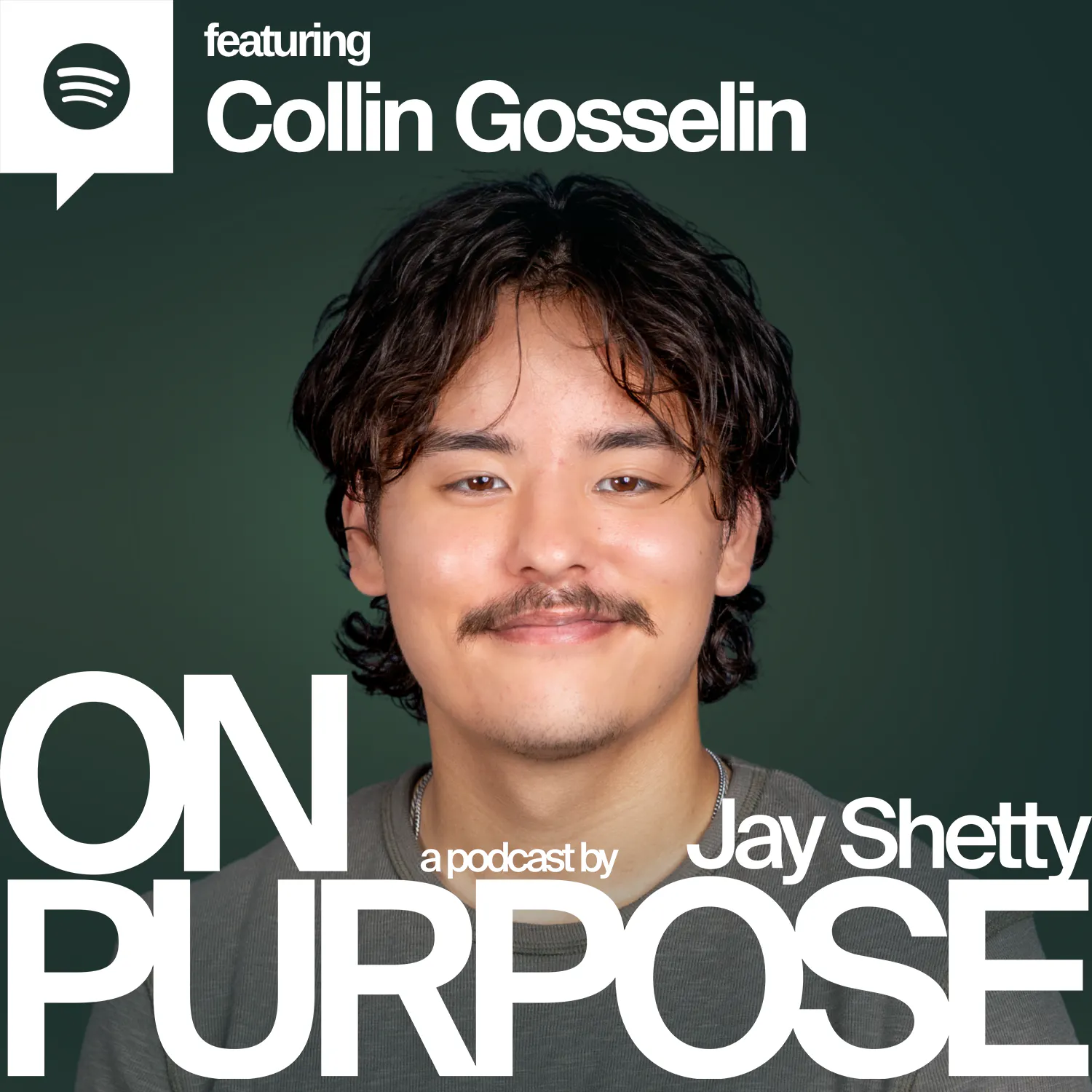
Sync measures how well what you feel inside matches what you do on the outside — and for years, Colin Gosselin was misaligned. Inside he was hurt and scared; outside he appeared troubled and reckless, which fed his mother's narrative. The shift he describes is about getting those two things back into alignment: deciding that his actions should reflect who he actually was and what he actually wanted, not just what his pain was pushing him toward.
Colin explains the gap between who he actually was inside and what the cameras captured — and how that misalignment between his inner pain and his outer appearance was weaponized against him.
"everything after all the abuse i faced and then went on camera as a kid and i was like withdrawn and like i looked out o..."
 Sync
Sync
Sync — When what you're doing and who you are stop matching, stop forcing the fit.
Sync measures how well your inner world matches your outer world. Carrie League's inner world — someone who wanted to go to concerts, try new things, and build something with Tim — was badly out of sync with her outer world, which was a competitive microbiology lab. The moment she named that gap clearly ('I was doomed') was the moment she started closing it. Leaving the program was sync in action: her choices finally matching who she actually was.
Carrie League pinpoints the exact moment she saw the gap between who she was — someone who wanted to go to concerts and engage with the world — and where she was, revealing the misalignment that led her to leave the PhD program.
"i was with this other group of phd candidates and i'd say oh i see that negativeland is coming to town does anyone want..."

 Sync
Sync
Sync — Before making any growth decision, check whether it will still allow your business to operate the way you actually believe it should.
Sync is about whether your inner world matches your outer world — whether what you believe lines up with what you're actually doing. Danny Walsh built Peak State Coffee around a set of values: organic sourcing, environmental giving, B Corp status. His fear was that bringing in outside investors would pull his outer actions out of alignment with those inner commitments. The whole conversation was him trying to figure out how to keep Sync turned on as the business scales.
Danny Walsh opens with the core tension he's been living — the fear that the only path to growth requires a trade-off with the values that make his business worth building in the first place.
"i've always been passionate about using business as a force for good in the world and i i think that the question i have..."
 Sync
Sync
Sync — Find where who you are on the inside no longer matches what you're putting out and close that gap.
Sync is about alignment between what you feel, say, and do. Rhea Jane's grandmother felt like herself on the inside but was being forced to sound like a machine on the outside — her inner world and outer expression were completely out of sync. VoiceBack was built specifically to close that gap. Rhea Jane's own Sync dial moved too: her personal grief and her technical skills finally pointed in the same direction.
Rhea Jane explains how her grandmother's refusal to use robotic text-to-speech tools — because they felt so foreign to who she was — became the seed of VoiceBack, a tool designed to close the gap between her inner identity and her outer voice.
"yeah so about three years ago my grandma was diagnosed with als and even after losing all ability to move the hardest pa..."
 Sync
Sync
Sync — Act on the value you feel most strongly in the moment, even when it conflicts with your original plan.
Sync is about alignment between what you feel inside and what you actually do. Dion Leonard had been running as a competitor, but what he felt in that river moment was responsibility and connection — not competition. Going back for Gobi was the action snapping into alignment with what he actually valued. Before that moment, he was saying one thing (I'm here to win) while something else was pulling at him. The river crossing closed that gap.
Dion describes the moment at the river crossing when everything snapped into alignment — the competitive racer and the person who felt responsible for Gobi finally became the same person.
"I just made this decision this instant decision to go back and to pick her up as i went down got on my knees and and lif..."
 Sync
Sync
Sync — In a stuck relationship, check whether what you're expressing matches what you actually feel — and close the gap.
Sync is the alignment between what you feel and what you express. Sabrina Zohar had been out of sync with her brother for years — carrying the real hurt but expressing it as general distance, resentment, or silence. The moment she aligned what she actually felt ('you never came back for me') with what she said out loud, the relationship could finally move. Sync restored made the reconciliation real.
Sabrina recounts the moment her brother's frustrated plea forced the real conversation they had never had — and she finally named what had actually hurt.
"my brother and i we had the biggest moment so in the book my brother was sent away when i was a kid and we for years did..."

 Sync
Sync
Sync — When you catch yourself agreeing to something you don't actually want, pause and say what you mean instead.
Sync is the alignment between what you feel inside and what you actually say and do. Sabrina Zohar had been deeply out of sync for years — internally she had needs and preferences, but externally she performed agreeableness and compliance. The shift toward saying 'no,' toward telling Ryan when something bothered her, was her slowly closing that gap. As her inner world and outer behavior started to match, her sense of self came back.
Sabrina describes the relationship where she had completely disappeared into someone else — the baseline of total misalignment between her inner self and outer life before the shift began.
"i lost myself i lost myself with my ex relationship i was a shell of a human i was ninety pounds soaking wet you know i'..."
 Sync
Sync
Sync — Stop performing a version of yourself you think is expected and let your actual knowledge and instincts lead the way.
Sync measures how well your inner world matches your outer world. Jason Kelce started the broadcast out of sync — his inner self (football lover, natural communicator) was being suppressed by his outer behavior (structured, cautious, robotic). The moment he yelled 'Go, Big Fella!' was the moment inner and outer snapped back into alignment. From that point, the broadcast felt natural because he stopped trying to be someone he wasn't.
Jason Kelce describes his first full NFL broadcast, capturing the moment his inner football player and outer commentator started coming back into alignment when the live environment made it feel real.
"you know not just kurt warner but dave pash the play by play guy that's up there with us both of those guys the the the..."

 Sync
Sync
Sync — Check whether the people you count on in your head actually show up the same way in practice.
Sync measures how well your inner world matches your outer world — the alignment between what you feel, say, and do. For years, Ben Affleck's inner sense of who his friends were was completely out of sync with how those people actually behaved. When the phones went silent after his movies bombed, it forced a painful recalibration. By the time the calls came back after his directorial comeback, he had synced up — his inner map matched reality, and he wasn't fooled by the flood of renewed attention.
Ben Affleck recounts the moment his phone lit up with calls after a directorial hit, and explains the inner calibration that kept him from being swept away by the renewed attention.
"i got like 10 phone calls from people that i heard from in you know three four years and i was telling my agent like can..."
 Sync
Sync
Sync — Stop performing a version of yourself that no longer matches what you actually think or believe.
Sync is about whether your inner world matches your outer world. For months after her doubts broke open, Jessica Wheeler was completely out of sync — dressing her kids in church clothes on Sundays to fool her mom on video calls, pretending she still believed, acting like nothing had changed. She was saying one thing on the outside and feeling something entirely different inside. Sending the family email was the moment she forced a sync — her outer world finally matched what she actually believed, at enormous personal cost.
Jessica Wheeler describes the months she spent performing belief for her family on video calls while privately having left the church — living in total misalignment between her inner and outer world.
"i did keep it secret for probably three months i'd pretend that i was going to church my parents lived about three hours..."

 Sync
Sync
Sync — Say the thing you already know is true but haven't admitted out loud yet.
Sync is about whether what you feel, say, and do are aligned. Michaela Nogueira had known for some time that she was putting her career above her marriage — Cody had told her directly. But she hadn't said it out loud publicly, hadn't fully owned it in the way she owned it in this conversation. When she said 'I've never said that before,' that was the moment of sync: the internal knowledge finally matching the spoken word.
Michaela says out loud, for the first time, that she was not the partner Cody needed — the moment her internal knowledge finally matched her spoken word.
"i was not the partner that cody needed and i've never said that before and it's embarrassing to say that but talking to..."

 Sync
Sync
Sync — Say the true thing out loud, even when the polished version feels safer.
Sync is about whether your inner world matches what you put out into the world. Michaela Nogueira had spent the interview process performing what she thought was expected — then stopped and said exactly what she actually felt. When she told the manager that beauty was her life and that she'd feel empty without it, her words finally matched her reality. That alignment is what the manager responded to.
Michaela describes the exact moment in her Ulta interview when she stopped reciting polished answers and said exactly what she actually felt — that beauty was her life and she'd feel empty without it.
"i went into this interview and i basically just was really honest with the manager i said i need this job i was not in t..."
 Sync
Sync
Sync — Stop editing your real answer to match what people expect, and say what you actually think instead.
Sync is about alignment between what you feel, say, and do. Jensen Huang's moment is a Sync event: he stopped performing the expected answer and said what he actually believed. For years, the entrepreneurship world expects founders to say 'it was all worth it.' Jensen Huang chose to align his public words with his private truth instead — a direct sync between inner experience and outer statement.
Jensen Huang stops performing the expected founder answer and publicly aligns what he says with what he actually believes — that he would not have started NVIDIA knowing only the pain, not the outcome.
"when somebody asked me would I do this again if your question is knowing how nvidia turned out yeah knowing the contribu..."
 Sync
Sync
Sync — Say the real thing out loud, even once, instead of the version that sounds less needy or more together.
Sync is about alignment between what you feel inside and what you say and do on the outside. For most of the story, Sayre Quevedo is deeply out of sync — telling Connor and his therapist he doesn't know what he wants from meeting his father, joking about it, claiming detachment, while his body keeps driving past the barbershop and his drunk recordings say 'nothing matters, same shit every day.' The moment he stands across the street and says 'I guess maybe a little hurt too' is the first time his inner state and his spoken words actually line up. That's Sync beginning to come back online.
Sayre articulates — for the first time out loud — exactly what he needs from confronting his father: not answers, but to be seen, and to declare that they'll survive without him.
"i just want him to know that we exist and that yeah and that it hurts that he didn't acknowledge us but also that we'll..."

 Sync
Sync
Sync — Say out loud what you actually want from a situation instead of acting on what you fear will happen.
Sync is about alignment between what you feel, say, and do. For most of this story, Alex Cooper was deeply out of sync — she wanted peace but kept manufacturing chaos, she knew Matt Kaplan was good but acted like he wasn't. The turning point came when she chose to close that gap: to say out loud that she had trust issues from her past, to communicate instead of investigate, and to let her actions start matching what she actually wanted the relationship to be.
Alex describes the moment she chose to tell Matt directly about her trust issues instead of acting them out — bringing her inner world into alignment with her outer relationship for the first time.
"i remember admitting to matt like this is something i do this is coming from my past i have been cheated on before and i..."

 Sync
Sync
Sync — Compare how you spend a typical week against what you'd fight hardest to protect, and close the gap between the two.
Sync measures how well your inner world matches your outer world. Before the scan, the anonymous CFO's inner life — what she actually valued — was badly out of sync with how she spent her time. Recovery forced alignment: lying in a hospital bed, the gap between what she felt and what she had been doing became impossible to ignore. Coming back and stepping away from the grind was her attempt to close that gap.
Jay reframes the work-versus-family binary for the anonymous CFO, replacing the concept of balance with a model of seasons and alignment.
"i don't believe balance exists because i believe life is more about seasons if you think about the way nature operates i..."

 Sync
Sync
Sync — Stop performing a version of yourself built for someone else's expectations and act from what you actually want.
Sync is about alignment between what you feel, say, and do. For most of Luann de Lesseps's adult life, there was a gap — she felt one thing but was performing another for the show, for her marriages, for her social position. By the time she describes being 'in the driver's seat,' she's describing full alignment: what she wants, what she does, and how she presents herself are finally the same thing.
Luann answers what the best part of getting older is, describing a life now fully in sync — what she feels, what she does, and how she presents herself are finally the same thing.
"i mean for me the best part is you know being in the driver's seat and not having to need a man right at this point in l..."
 Sync
Sync
Sync — Before reversing a decision, ask whether it was made from the right place — and if it was, hold to it.
Sync is about your inner world matching your outer world — what you feel, say, and do all pointing the same direction. Travis Kelsey's relationship with Dwayne Bowe was built on genuine admiration, and giving him the jersey in the first place reflected that. When the jersey turned out to be significant, Travis didn't break sync by going back on his word. He kept his actions aligned with what he actually valued — the relationship, not the artifact. The decision wasn't hard because there was no gap between how he felt and what he did.
Travis Kelce recounts how he gave away his record-breaking jersey to Dwayne Bowe before the game, and explains why taking it back never even crossed his mind once he found out about the record.
"shout out to dee bow my guy dwayne bow man i love dwayne man he came up to me before the game and and and just asked me..."

 Sync
Sync
Sync — Make a standing commitment that forces your behavior to catch up with what you actually want, not just what you're afraid of.
Sync is about whether your inner world matches your outer world — whether what you feel, say, and do are aligned. Kemp Powers felt guilt and love for his daughter but acted like a man who had already given up. He told himself stepping back was noble, but it wasn't what he actually felt — it was a way of avoiding the pain of trying and failing again. The Sunday call pact was the moment his actions finally started to align with what he actually felt: that he wanted to be her father.
Kemp describes the Sunday pact he and his daughter made on her 13th birthday — the moment his actions began to align with his actual feelings about wanting to be her father.
"when my daughter's thirteenth birthday came around we made a pact going forward we would speak every sunday at twelve p..."