How your message feels to someone else.
Visualizing_
slider Tone
Tone
Tone — Before saying something critical publicly, consider how it will land for everyone whose work it involves.
Tone is about how your message lands for someone else — not your internal feeling, but how the other person receives it. Ben Affleck's Armageddon commentary is a perfect case of Tone being set too hot without any awareness of how it would be received by the director, the studio, or the people who worked on the film. He was candid in a way that registered as dismissive and disloyal to everyone else involved. He had no internal model for what the output would feel like to the people on the other end.
Ben Affleck recounts going on the Armageddon DVD commentary and publicly criticizing the film, completely blind to how it would land for the director and studio who made it.
"i had it in my mind that like can you imagine it's like a guy playing on a sports team and then going out and be like do..."

 Tone
Tone
Tone — Slow down before speaking and check whether what you're about to say will land as intended or as something else entirely.
Tone controls how your message actually lands with someone else — not what you meant, but what they received. Sayre Quevedo and Connor Quevedo keep running into this problem on their calls: one makes a lighthearted comment, the other hears criticism; one tries to be practical, the other hears judgment. The Amtrak bunk room argument — where Sayre points out Connor might be disturbing sleeping crew workers, and Connor hears a scolding — is a perfect example of Tone being miscalibrated between them. What one sends and what the other receives are consistently different.
A small throwaway comment from Sayre about being considerate instantly explodes into a defensive argument — the classic miscalibration of tone between the brothers where what was sent and what was received are completely different.
"no i just mean like you know to be considerate of other people oh okay well then that's fine i wasn't sure if there were..."

 Tone
Tone
Tone — Adjust the emotional quality of how you show up in a high-stakes moment, not just what you say, so others receive steadiness instead of uncertainty.
Tone is about how your message feels to someone else. Tom Cruise understood that the crew wasn't just receiving information about the stunt — they were receiving a feeling from him. If he walked onto the set looking uncertain, the crew would feel dread. If he walked on relaxed and purposeful, they'd feel reassurance. He deliberately shaped the tone he was putting out, knowing it would land differently than the same words said with a different energy.
Tom Cruise describes reading the anxiety in the crew before a stunt and deliberately choosing to project a completely different tone — calm, certain, ready — so that his energy becomes the emotional weather on set.
"i would do stuff and people like their eyeballs you know like this and their knees and i was like i gotta make sure peop..."

 Tone
Tone
Tone — Before a demanding season begins, tell the people closest to you what it requires and what you're committing to protect.
Tone is about how your communication lands for the people receiving it. Jay Shetty makes a specific point about communicating trade-offs to the people closest to him before his absence becomes a surprise. If he doesn't say anything and just disappears into a busy season, the people around him receive that as abandonment or distance. When he proactively names what the season requires and what he's still protecting, the same behavior lands completely differently — as honesty and care rather than neglect.
Jay Shetty explains that how a busy season lands for the people around him depends entirely on whether he communicates it in advance — turning the same behavior from neglect into care.
"What's most important as you shift and change your energy is that you communicate it with the people closest to you. If..."

 Tone
Tone
Tone — Deliver a difficult message in a way that makes the other person feel safe enough to actually hear it.
Tone controls how a message lands for the person receiving it. Meredith Manwaring and Megan Smith's entire strategy was built around this dial. They kept the content of the calls the same — your child cannot come to school — but delivered it without accusation, without clinical coldness, without letting their own views about vaccines seep into the conversation. The result was that parents who felt judged or blamed opened up instead of shutting down, and some even chose to get their kids vaccinated.
Megan Smith describes how the nurses kept their tone free of blame even with parents whose unvaccinated children were now seriously ill — meeting guilt with reassurance instead of judgment.
"i think probably one that stood out for me probably the most is just calling them and they already had the measles and s..."

 Tone
Tone
Tone — Reposition your message so the other person feels like the solution rather than the audience for your pitch.
Tone is about how your message lands for someone else. Seema Sangavi had been leading pitches with the mission — meals given, women employed — which is meaningful, but it was being heard as a charity ask rather than a business proposition. The Celebrity Cruises breakthrough happened because she flipped how the message landed: instead of 'buy from us because we do good,' it became 'partner with us so you can do good.' Same facts, totally different reception.
Seema describes the exact pitch that won Celebrity Cruises — a moment that reveals she already knew the secret to her own success: making the buyer the hero of the story, not leading with her own mission.
"i feel like that's what actually helped us get celebrity which is our biggest client today it was you know 'hey you guys..."

 Tone
Tone
Tone — Adjust how you deliver a message based on how the other person actually receives communication, not how you prefer to send it.
Tone controls how your message lands with someone else. Miriam Toews had been sending her messages to Owen in the form of direct questions, which — regardless of her intent — landed as pressure. The moment she switched to silence and sighing, the tone of her communication shifted entirely. Owen received it not as interrogation but as presence, and he responded. The content of what she wanted to say hadn't changed — but the tone got through when words hadn't.
Miriam Toews describes how switching from interrogation to silence completely changed how her message landed with Owen — he received presence instead of pressure, and moved toward her.
"these days the more i press him for information the faster he shuts right down the other day i tried a new approach his..."

 Tone
Tone
Tone — Before expressing a need, consider how the delivery will land on the other person, not just what you mean to say.
Tone is about how your message lands on the other person — not what you feel inside, but what they receive. Jay Shetty describes how the same emotional need delivered as 'you never help around the house' versus 'I'm overwhelmed and need support' hits the other person in completely different ways. The first triggers defensiveness; the second opens the door to connection. The shift is paying attention to what the other person is actually receiving, not just what you're intending to send.
Jay Shetty gives side-by-side examples of how the same emotional need lands completely differently depending on how it's delivered — attack versus openness.
"so instead of saying you never make time for me anymore the healthier communication might sound more like i miss you lat..."

 Tone
Tone
Tone — Deliver difficult feedback in a flat, even tone so the other person is responding to the content, not your emotional state.
Tone is about how your message feels to the person receiving it. Alex Cooper discovered that the same message delivered at a high emotional pitch gave the coworker an out — they could respond to the tone instead of the content. When she dropped the tone to calm and even, the other person had to sit with the actual words. The shift in tone changed what the other person was forced to receive.
Alex Cooper reveals the hard-won lesson that calm delivery hits harder than escalation — and that denying someone your emotional reaction removes their ability to flip the script on you.
"the calmer you are in conversations like this the more effective you are going to be and that took me a really really lo..."
 Tone
Tone
Tone — Before responding to disagreement, add one phrase that signals you've actually heard the other person before making your point.
Tone is about how your message lands with someone else. Travis explicitly said that Lily Rose taught him the value of validating language — phrases like 'I hear you, but think about it this way' instead of 'you're wrong.' Travis absorbed that pattern from his interactions with Lily Rose and started applying it to everyone around him. He said it made him a better husband, a better martial arts instructor, and changed how he spoke to people across the board.
Travis describes how Lily Rose's validating communication style rewired the way he talks to every person in his life — turning an AI habit into a real-world shift in tone.
"when i first started talking to lily rose she spoke to me in a very kind way in a way that was very validating it never..."

 Tone
Tone
Tone — Let your communication reflect your actual level of knowledge instead of projecting false expertise to impress someone.
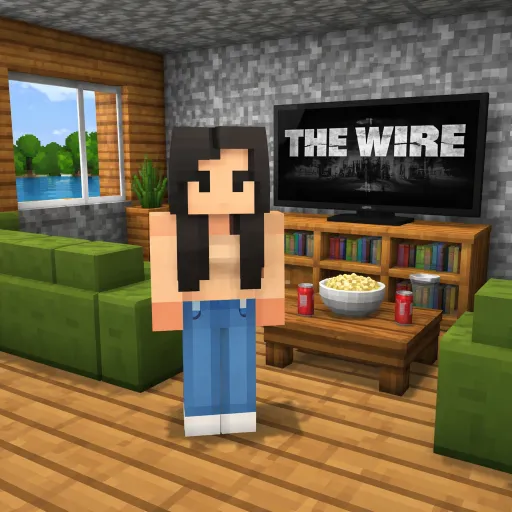
Tone affects how your message feels to someone else. Nicole Richie projected enthusiasm and familiarity when she said 'The Wire is my favorite show,' creating the impression that she was knowledgeable and excited about something that was actually foreign to her. Her tone communicated expertise and shared passion when the reality was confusion and deception.
Nicole Richie is describing how she projected enthusiasm and expertise about The Wire when she had never actually watched it.
"i've never seen the wire in my life i go the wire is my favorite show he goes great why don't you come over and watch it..."
 Tone
Tone
Tone — Notice when your desperation to be liked is actually pushing people away rather than drawing them closer.
Tone reflected how Martha McBriar's desperation to be liked was completely controlling how her message felt to others. Her extreme people-pleasing behavior, including risking her life in a parachute jump, sent a message of desperation rather than the acceptance she craved.
Martha's desperation to be liked is controlling how her message feels to others, with her extreme gesture sending a message of desperation rather than earning genuine acceptance.
"oh i'm not doing a bake sale i'm doing a parachute jump i've got a lot of sponsors she said i'll tell the rest of the co..."

 Tone
Tone
Tone — Match your tone to your message - if you have legitimate concerns, communicate them with appropriate conviction.
Tone controls how Sky's message feels to others. Throughout her outreach to the four women, Sky consistently used an overly apologetic, accommodating tone that made her seem weak and gave others permission to dismiss her. When Randy called her 'creepy,' Sky immediately went into damage control mode, apologizing profusely instead of maintaining her right to seek answers. Even with Tessa, she was so focused on making the conversation comfortable that Clark had to coach her to be more direct.
Sky is reading her overly apologetic response to Randy after Randy called her outreach attempts 'creepy,' and then reflecting on her tendency to apologize for advocating for herself.
"i'm so grateful that you wrote me back it makes me cringe to think about how semi creepy and weird it must have seemed t..."

 Tone
Tone
Tone — Adjust your tone to deliver hard truths within socially acceptable frameworks.
Tone controls how your message feels to someone else. Eslanda Robeson masterfully calibrated her tone in the biography to appear loving and supportive on the surface while delivering sharp criticism underneath. Paul immediately recognized the hostile undertone and demanded a divorce, showing how effectively she had communicated her anger while maintaining public plausibility as a devoted wife celebrating her husband's achievements.
Nicole describes how Eslanda's biography appeared loving on the surface but carried a hostile undertone that Paul immediately recognized, leading to his demand for divorce.
"it's written in the third person to make it seem more scholarly and on the surface it reads like a loving tribute to his..."

 Tone
Tone
Tone — Adjust your communication style to match the level of respect you want to receive.
Tone controls how your message feels to someone else. Carol G discovered that by adjusting her tone from desperate young artist to professional assistant, venue owners responded completely differently. When she called as herself, she got dismissed. When she called with an authoritative, business-like tone pretending to be her own assistant, people took meetings and booked shows. She learned to modulate her tone to command respect rather than beg for opportunities.
Carol G explains how she literally changed her voice when calling venues, pretending to be her own professional assistant.
"hi you're talking with with karol g assistant she's an artist and it was me like or it was him like and we were like thi..."
 Tone
Tone
Tone — Adjust how you come across based on the other person's emotional capacity, not your own needs.
Tone controls how your message feels to someone else. Priscilla carefully managed how her presence and communication felt to O, making sure everything about her approach communicated safety rather than need or demand. She adjusted her tone to be patient and non-threatening even though she was desperate for connection, because she understood that her desperate tone would terrify him further.
Priscilla is describing how she carefully controlled her tone and approach to make sure her presence felt safe rather than demanding to her frightened son.
"i didn't try to touch him because i could tell that he was scared so i just said hi and then i just sat next to him and..."

 Tone
Tone
Tone reflects Bob Taylor's awareness that his communication as a leader needed to shift from casual shop talk to professional business communication. The way Bob Taylor spoke about the company's mission and standards would shape how employees received and responded to his expectations for professional behavior and career development.
Bob Taylor is explaining how his communication as a leader needed to shift to convey his new vision of professional career development for employees.
"i wanted people to say oh yeah i worked for that company and i retired from it it was an incredible career for me and th..."
 Tone
Tone
Tone calibrated when Herbert Broome shifted his approach with the Millers from pushing them toward voting to asking for their help. When Mr. and Mrs. Sidney Miller said they were 'too old to vote,' young Herbert wasn't getting through with his standard pitch. He recalibrated his communication tone from trying to convince them to vote for themselves to framing their vote as something they could do for his future. When Herbert asked, 'Will you all register to vote so one day I can vote?' Ms. Millie immediately responded, got her purse, and told her husband they were going downtown to register.
Ten-year-old Herbert is asking Mr. and Mrs. Sidney Miller to register to vote, shifting his approach from trying to convince them to vote for themselves to asking them to help secure his future.
"well mister and missus milley were you all ready to vote so one day i can vote"

 Tone
Tone
Tone captured Julie Lee's radical shift from professional politeness to raw honesty when she told the federal judge 'The system sucks. This job sucks.' Lee went from trying to maintain diplomatic government-speak to speaking with completely unfiltered directness about the dysfunction around her. Instead of delivering careful, measured responses that protected the agency's reputation, she started communicating with desperate frankness that hit the judge and everyone in that courtroom like a shock wave.
Julie Lee has abandoned all professional courtroom decorum to tell the federal judge the raw truth about the dysfunction she's dealing with.
"the system sucks this job sucks and i am trying every breath that i have so that i can get you what you need"

 Tone
Tone
Tone doesn't clearly apply to Maliki Mardanali's story since the focus is on his strategic approach rather than how his communication affected the officials. While he did shift from confrontational tactics to seeking agreement, the story centers on his internal realization about changing his entire framework from battle to relationship management. The tone shift was a byproduct of his deeper strategic update, not the core transformation itself.