Adjust your environment so you can succeed — instead of forcing yourself to struggle. Change the setup, not yourself.
Visualizing_
selector Accessibility
Accessibility — When the official path is blocked, look for an unconventional route that works within the constraints you actually have.
Accessibility is about changing your setup to succeed instead of forcing yourself to struggle through an impossible situation. Colin Gosselin couldn't make the official systems move faster, so he stopped trying to use the front door and built a side entrance — a crayon note, a departing kid, a brochure with an address. He adjusted the environment he was working with rather than waiting for the environment to adjust to him.
Colin describes how he engineered his only available exit from the institution — smuggling a crayon letter through a departing peer because every official channel had been blocked.
"this kid came in he's a couple years older than me and his name was zach and i wrote a letter which i was very secretive..."
 Accessibility
Accessibility — Find a role or structure that makes connection natural so you don't have to force it through willpower alone.
Accessibility is about adjusting your environment so you can succeed — changing the setup, not yourself. Marisa Januzzi Thomas didn't become less awkward or more naturally social. She found a setup — the truck, the music, the slow cruise — that made connection easy and low-pressure. The ice cream truck was an accessibility accommodation for someone who loved people but didn't know how to reach them. It gave her a role, a reason to be there, and a built-in excuse for the interaction.
Marisa explains how she talked herself into applying for the ice cream truck job despite having no experience — changing the setup rather than waiting for her circumstances to change.
"you know i i don't know i had zero experience driving trucks and you know in fact it had taken me three tries to get my..."

 Accessibility
Accessibility — When someone keeps struggling with the same task, change the structure of the task instead of pushing them harder.
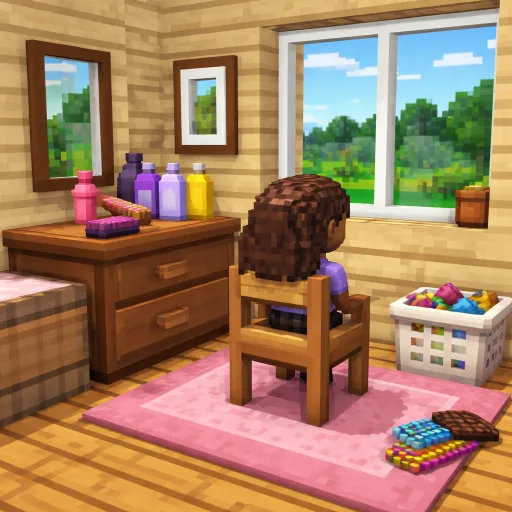
Accessibility is about adjusting the environment so someone can succeed, instead of forcing them to struggle through an unchanged setup. For years, Myra Flynn had been doing Avalon's hair the same way — the same brushes, the same process, the same expectation that Avalon would sit still and endure it. The shift was letting Avalon take ownership of a small section herself, which changed the entire experience from something done to her into something partially hers. Myra changed the setup rather than expecting Avalon to change.
The moment Myra lets Avalon do her own section of hair — and for the first time, Avalon smiles instead of cries — showing what happened when the environment changed instead of the child.
"what's it feel like to do your own hair soft it feels soft it doesn't feel hard like a rock but my mama does it it feels..."

 Accessibility
Accessibility — Redesign the conditions around your work so that they support peak performance instead of depleting it before you start.
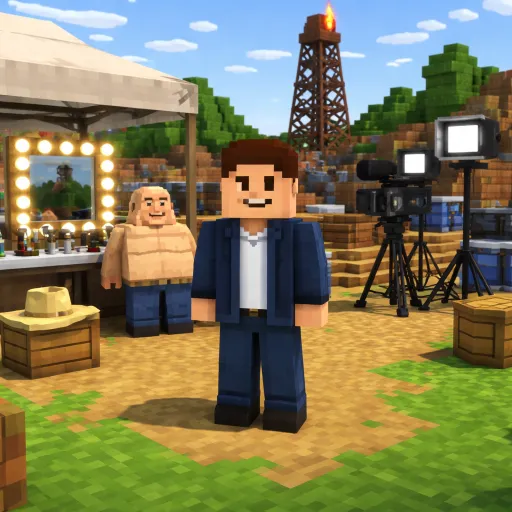
Accessibility is about changing the setup instead of forcing yourself to struggle through a bad configuration. Tom Cruise didn't just white-knuckle through six hours of daily makeup — he restructured the environment itself so he could perform at his best. By cutting the makeup time to one hour, he adjusted the conditions of his day to match what he needed to do his job, rather than grinding against a system that was draining him before the cameras even rolled.
Tom Cruise is explaining how he calculated the daily math of a 12-hour filming day consumed by a six-hour makeup process — and why he knew the setup had to change.
"the first time we did the makeup it took six hours okay so you see that character we gotta cut this down we gotta get i..."

 Accessibility
Accessibility — When a situation or environment consistently holds you back, focus on changing the environment rather than grinding harder inside a broken setup.
Accessibility is about adjusting your environment so you can succeed, instead of forcing yourself to struggle through a setup that doesn't fit. Oprah Winfrey did not adapt to the kindergarten classroom — she changed the classroom she was in. She identified the mismatch between where she was placed and where she actually functioned, and she took the steps to correct the environment itself. She modified her setup rather than shrinking herself to fit the one she was handed.
Oprah describes arriving in the Milwaukee kindergarten classroom and immediately recognizing the mismatch — then taking direct action to change her environment rather than adapt to it.
"instead i get sent to milwaukee and i walk into a classroom with brown and a couple of white and black children all play..."

 Accessibility
Accessibility — Modify whatever aspects of a difficult situation are within your control before deciding the situation itself is the obstacle.
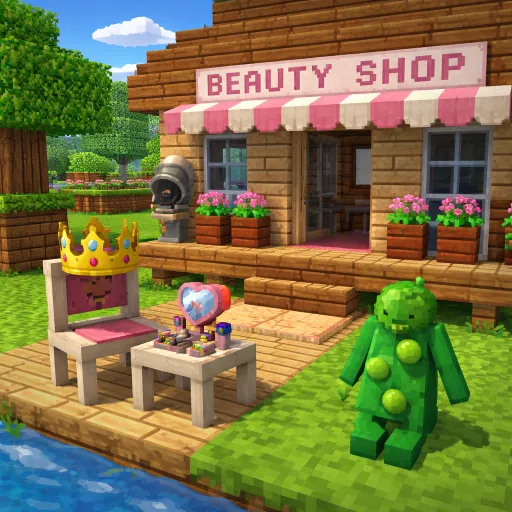
Accessibility is about adjusting your environment so you can succeed instead of forcing yourself to struggle through a bad setup. Faye Lane couldn't change her role or the basic shape of her costume, but she adjusted everything she could — re-pinning the crepe paper to flatter her figure, attaching her Burger King crown, bedazzling every inch of fabric. She didn't accept the setup as given. She modified it until she could work with it.
Faye Lane describes reworking every element of the Green Bean costume she could control — strategically repinning, crowning, and bedazzling it until the setup finally worked for her.
"first of all this horrible leotard i strategically re safety pinned the crepe paper pea pods to hide my figure flaws and..."

 Accessibility
Accessibility — Change the conditions of the attempt — the time, the place, the tools — until the environment makes success accessible.
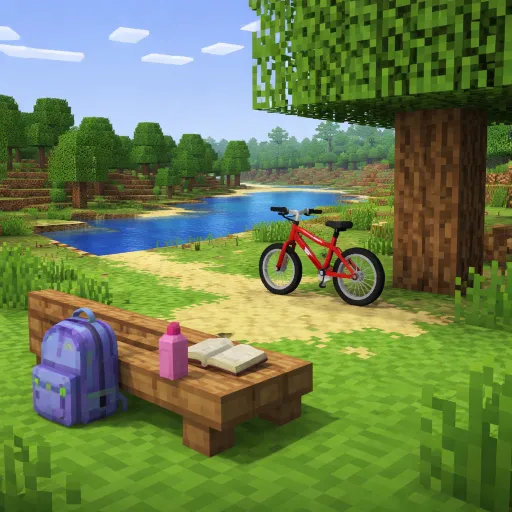
Accessibility is about changing the setup so you can succeed instead of forcing yourself to struggle in a setup that doesn't work for you. Francesca Hayes did this literally and methodically: she used a smaller bike, a downhill slope, a time of day when no one was around, and a borrowed helmet. She didn't try to learn the "normal" way in the "normal" conditions. She adjusted every variable she could control until the environment made success possible. The setup changed; she didn't have to be a different person.
Francesca Hayes describes engineering each condition for success — the right size bike, the right slope, the right one person told — adjusting every variable in the setup so the skill could actually happen.
"i got good tips from them like to use a little bit of a hill and that gravity would help balance the bike and to use a b..."

 Accessibility
Accessibility — When your current setup keeps failing, change the structure instead of trying harder within the same broken system.
Accessibility is about changing your setup so you can function — not forcing yourself to struggle through a structure that doesn't work. Krishna Kalyanen didn't try to force a broken vendor relationship to keep working. He rebuilt the setup entirely. He moved cities, rented space, bought different equipment, and created an environment where the work could actually get done. The washing machine as a tumbler is the clearest version of this — he didn't wait for the right tool, he made the environment work with what he had.
Krishna describes how he physically rebuilt his entire production setup from scratch — renting space in Indianapolis, sleeping on a cot, and improvising a washing machine as a cereal tumbler.
"i looked at different places i ended up renting about a 3,000 square foot space in an office building in indianapolis an..."

 Accessibility
Accessibility — Redesign your environment to make the right behavior the easy default instead of the hard choice.
Accessibility is about adjusting the environment so you can succeed instead of forcing yourself to struggle through a setup that doesn't work for you. Krishna Kalyanen couldn't change his diagnoses, but he could change his environment — specifically, what he ate. Rather than trying to white-knuckle his way through a diet that didn't fit his body, he rebuilt his food environment from scratch so that eating well for his condition became the default, not the exception.
Krishna describes how being surrounded by amazing food he couldn't eat pushed him to rebuild his entire food environment from scratch using alternative ingredients.
"living in new york you know new york's like the food capital of the world maybe or one of the food capitals of the world..."
 Accessibility
Accessibility — Adjust your approach to work with the situation instead of demanding the situation change to fit you.
Accessibility shows Lisa Schroyer adjusting her approach to an impossible situation rather than fighting against it. Initially, she tried to control the chaotic cleanup process and felt angry about how wrong everything felt. But she realized she couldn't control how her siblings handled the trauma - she could only change her own approach. She stopped demanding the situation be different and found a way to participate in it, even finding moments of connection through humor.
Lisa realizes she cannot control the chaotic cleanup situation and decides to participate in it rather than fight against it.
"so i go into the rv and we spent the next few days cleaning that rv out getting the soiled stuff out identifying the imp..."

 Accessibility
Accessibility — Change your approach to match your resources instead of waiting for ideal conditions.
Accessibility is about adjusting your environment so you can succeed instead of forcing yourself to struggle. Carl Centro couldn't afford to pay someone to build her website, so instead of struggling with that limitation, she changed the setup by learning to code herself. She adapted her approach to match her resources rather than staying stuck.
Carl Centro describes adapting her approach after being scammed out of her last twelve dollars instead of staying stuck in her limitations.
"i opened my bank account and i feel like we've all been there when you look at your bank account you're like oh my gosh..."
 Accessibility
Accessibility — Adjust your team structure and resources to match your opportunity size rather than struggling with insufficient capacity.
Accessibility means adjusting your environment so you can succeed instead of forcing yourself to struggle. Emily Bordner was struggling to handle massive growth with her existing solo-operation setup. Rather than forcing herself to work harder within the same constraints, she adjusted her environment by hiring specialized talent who could handle wholesale relationships and partnerships, making success more accessible rather than grinding through overwhelm.
Emily Bordner is explaining how she hired specialized talent to handle explosive growth rather than trying to manage everything herself.
"i am very lucky to have just hired the ex vp of cult indoctrination from liquid death uh-huh nice he just joined our tea..."
 Accessibility
Accessibility — Change your environment to remove obstacles instead of fighting them with discipline.
Accessibility involves adjusting your environment so you can succeed instead of forcing yourself to struggle. Tim Ferriss stopped trying to use willpower to resist scientifically designed addictive technology and instead changed his environment by removing the apps entirely. Rather than struggling against billion-dollar algorithms designed to capture attention, he made success easier by eliminating the temptation from his immediate environment.
Tim Ferriss is explaining his strategy for dealing with compulsive technology use by removing social media apps entirely from his phone.
"certainly for the last i'd say two maybe three years i've had no social media apps on my phone because if you think if y..."
 Accessibility
Accessibility — Identify and use available resources and support systems rather than trying to solve everything independently.
Accessibility means adjusting your environment so you can succeed rather than forcing yourself to struggle. Cara Delevingne was trying to overcome addiction through personal strength instead of accessing the medical and therapeutic tools designed to help. The seizures showed her that she needed to change her approach, not just try harder.
Cara Delevingne is explaining that the infamous Burning Man photos captured her right after she had a seizure from trying to detox on her own.
"i started having seizures and that's literally those photos were taken right after i'd had a seizure at burning man and..."

 Accessibility
Accessibility — Change the situation or expectations instead of forcing yourself to handle things that don't suit you.
Accessibility activated when Michael Donovan realized he could change the setup instead of forcing himself to be the hero. Rather than struggle with the expectation that as a firefighter he should handle the dangerous cat situation, he adjusted the environment by clearly stating he wouldn't do it, allowing Kurt to step up instead.
Michael is calmly telling his partner Kurt that he won't be the one to handle the dangerous wild cat situation.
"kurt leans over to me and he says mike one of us is gonna have to open that door and let the cat in its lair and being a..."

 Accessibility
Accessibility — Change where and how you present your solution rather than expecting people to understand your preferred context.
Accessibility helped Justin Gold adjust his product placement so customers could actually succeed with his squeeze packs. Instead of forcing people to figure out how peanut butter fit with energy bars, he moved the products to where people already understood the context. He changed the environment to make success easier rather than expecting customers to adapt to his preferred setup.
Justin Gold realizes he needs to adjust his product placement strategy by moving squeeze packs from the energy section to next to regular nut butter jars.
"and boom like it started to work people started to buy them them and what i started to learn was the number three reason..."
 Accessibility
Accessibility — Look at everyday objects around you and reimagine how they could solve your current challenges.
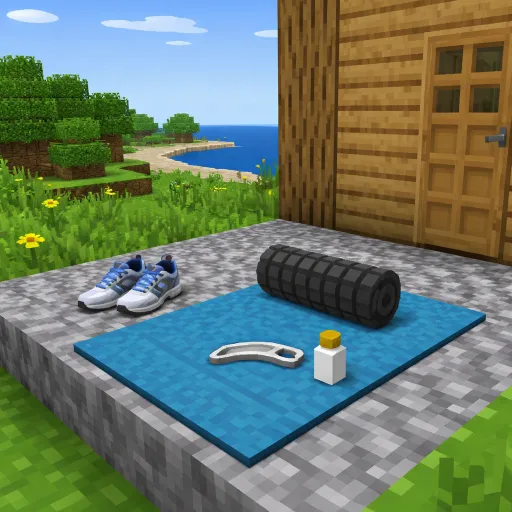
Accessibility shifted dramatically for David Rustiano when he saw the Irish Spring soap bar. For months, he'd been struggling with muscle soreness after runs, dependent on expensive physical therapy appointments he couldn't access regularly. Instead of continuing to force himself through the pain or wait for professional treatment, he adjusted his environment to work with what he had. He recognized that the soap's curved shape could function as a muscle scraping tool, transforming his everyday shower into a recovery space.
David Rustiano explains how he discovered his business idea by recognizing the potential in an everyday soap bar during COVID lockdown.
"like so many businesses we started during covid my men's soccer leagues were shut down here in new jersey so i needed so..."
 Accessibility
Accessibility — Change the environment to make success possible instead of forcing yourself through impossible conditions.
Accessibility became Jensen Huang's strategy when he changed the environment instead of trying to overcome impossible odds through effort alone. Rather than pushing his team harder to develop faster, he bought the emulator to make perfect first-try development possible. He adjusted the setup so they could succeed, not force themselves to struggle through traditional methods.
Jensen is describing how he changed the environment to make success possible by buying an emulator machine, adjusting the setup instead of forcing his team to struggle through traditional development methods.
"so we heard about this company called iqos was building an emulator and this incredible machine this giant machine it wo..."
 Accessibility
Accessibility — Modify your biological or physical environment to work with your body's needs instead of fighting them.
Accessibility reflects how Jasper Lawrence adjusted his environment to support his success rather than continuing to struggle against his condition. Instead of forcing himself to endure worsening asthma and failed treatments, he changed his entire setup—traveling to Africa, exposing himself to hookworms, and creating a new biological environment in his gut that could regulate his immune system.
Jasper Lawrence describes the moment he discovered research about hookworms and asthma, leading him to immediately decide he needed to get hookworms despite his lifelong fear of parasites.
"and after lunch and i stayed on the internet until perhaps two in the morning i didn't stop and he's reading and reading..."
 Accessibility
Accessibility — Change the playing field when the current setup consistently creates conflict and resistance.
Accessibility shows John Gabbert changing his setup rather than forcing himself to struggle. Instead of battling his father in court or accepting a move to Dallas, he created a different environment where he could succeed by taking full ownership of Room and Board and building the business he actually wanted.
John Gabbert is explaining why he chose not to take his father to court over their broken ownership agreement.
"i sat with the attorney and we quickly said you don't wanna do that yeah that's not something you wanna do to your famil..."