How much you physically feel. Turn it up and every bump, vibration, and ache registers. Turn it down and the pain, tension, and discomfort fade into the background.
Visualizing_
slider Haptics
Haptics — Decide in advance how much discomfort you will sit with before you allow yourself relief, and hold that line.
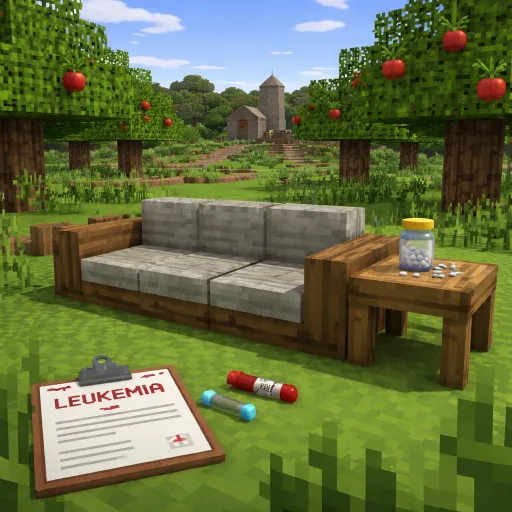
Haptics measures how much physical sensation registers — how much pain, tension, and discomfort a person actually feels and absorbs. Ivan Lowe's haptics were turned all the way up: every movement felt like his bones were shattering, and the pain was so all-consuming he couldn't think straight. He made a deliberate choice to endure what he could without opioids, keeping the setting high but trying to stop it from destroying him completely.
Ivan Lowe describes lying bedridden with bone pain so severe he could barely think, deliberately rationing opioids while enduring wave after wave of unbearable physical sensation.
"i knew that opioids were addictive and so i told myself i will not take one unless i absolutely need to you know i don't..."
 Haptics
Haptics — Stop overriding physical signals with mental assessments and let your body's actual state set the pace for the day.
Haptics controls how much physical sensation a person registers — how much the bumps, aches, and signals from the body actually land. Dr. Becky Kennedy had hers turned way down after her emergency C-section. She had just had major abdominal surgery and was baking biscotti on day six, telling her husband she only needed four hours of sleep. Her body was sending signals she wasn't picking up at all. The hospital readmission was the forced recalibration — after that, the mandatory daily naps were her finally letting those signals register.
Dr. Becky Kennedy recounts the physical signals she was completely missing in the days after her emergency C-section — baking, hosting guests, and declaring she barely needed sleep — before her body forced the truth.
"i come home and i am i've always really liked action and i was baking biscotti and this is like a totally psychotic thin..."

 Haptics
Haptics — Notice when your body reacts strongly to something you've been trained to ignore — that's information worth paying attention to.
Haptics controls how much someone physically and emotionally feels. Charlie had spent years with his haptics dialed way down — military training explicitly atrophied his empathy centers, as he put it, because feeling too much is considered a liability in combat roles. At the funeral, sitting in the back row next to steel-faced SEALs, the sound of Zelma sobbing turned his haptics back up without his permission. He got lightheaded when he learned Eddie had died by suicide. His body registered what his training told him to suppress.
Charlie explains how military training deliberately suppressed his capacity to feel, while admitting that at Eddie's funeral, his long-dialed-down emotional responses came flooding back despite everything his training told him.
"you lose a degree of empathy in the military because empathy is not a not a it's not a advantageous skill to have in mos..."

 Haptics
Haptics — When discomfort spikes after removing a source of stress, resist treating the spike as information about whether the removal was right.
Haptics is running at maximum for the fearfully attached person who just left a toxic relationship. Alex Cooper describes a nervous system so calibrated to chaos that every little bump — the silence, the stillness, the absence of drama — registers as dangerous. The person physically feels the emptiness as pain, as wrongness, as emergency. The work being described is essentially learning to turn haptics down enough that the quiet stops feeling like a five-alarm warning and starts feeling like just... quiet.
Alex Cooper vividly describes how the childhood nervous system was calibrated to register the tiniest signals of danger — and how that same exquisite sensitivity gets carried into adult relationships.
"because again remember i mentioned we were talking about childhood it's this was a survival skill learned in childhood t..."
 Haptics
Haptics — Gradually reduce the physical intensity of a feared scenario by re-encountering it in low-stakes mental rehearsal until the body stops overreacting.
Haptics controls how strongly the body registers discomfort. Jay Shetty started each visualization with his haptics turned way up — he felt sick to his stomach every time. Through repeated rehearsal, his body gradually stopped amplifying the imagined threat. By the eighth attempt, the physical discomfort had faded, and by the time he was on the actual plane, his haptics were dialed down enough that the fear didn't interfere.
Jay Shetty recounts the physical, sensory rehearsal he did the night before his first skydive — deliberately trying to feel the altitude and the sensation until his body stopped recoiling.
"i remember that night i ended up watching skydiving videos on youtube and i would close my eyes and i would visualize wh..."

 Haptics
Haptics — Let your body fully experience what you've been mentally bracing against instead of trying to cushion or pre-manage the sensation.
Haptics controls how much physical sensation registers. Daryl Thorne had been mentally bracing against the physical experience of the Drake Passage for three months. When he actually got there, instead of numbing out or shutting down, he let his body feel everything — the waves, the floor moving, the leaping, the spinning. His haptics were fully on, and that full-body engagement was what transformed the fear rather than suppressed it.
Daryl Thorne describes the dance party in the middle of the Drake Passage — the moment three months of stored fear discharged through full-body physical movement.
"and it is like the most incredible leaping and spinning and twirling and just like you would jump in the air and the flo..."

 Haptics
Haptics — Practice noticing physical discomfort without assigning it meaning about your worth or needing to immediately fix it.
Haptics is about how much you physically feel — and how you relate to discomfort in your body. Camila Mendes described being horrified by the physical experience of her own body on days when she felt bloated or off, to the point of panic attacks. Her haptics were turned all the way up in a painful direction. The therapeutic work gradually recalibrated how she registered and responded to physical discomfort — it stopped being an emergency and became just a piece of information.
Camila Mendes describes how the Riverdale costume turned every bad body-image day into a full-scale physical crisis — her haptics turned all the way up with nowhere to escape.
"i felt a lack of control because you know i'm wearing a costume for a character that dresses differently than i would wa..."

 Haptics
Haptics — Stay present with difficult feelings instead of suppressing them, even when they feel like too much to hold.
Haptics controls how much you allow yourself to physically and emotionally feel. Riley Keough made a deliberate choice to feel her grief — even when it was unbearable — instead of numbing or suppressing it the way her mother had for decades. She described some of the feelings as 'extremely unbearable,' but she stayed with them rather than turning the dial down. That was the core of her conscious approach to processing loss.
Riley explains her conscious decision to stay with unbearable feelings rather than suppress them the way her mother had done for decades.
"the only like step that i've actively taken is to like feel my feelings it's a good step it was a good step which is a l..."
 Haptics
Haptics — Let your most difficult experiences become the honest reference point that puts all other pain in accurate perspective.
Haptics measures how intensely someone physically and emotionally registers pain and impact. Jill Biden's Haptics were fully on during Bo's illness — she felt every shift, every small hope, every setback. After losing him, the setting didn't turn off. But the baseline changed. Political cruelty and public attacks — things that might have landed hard before — simply couldn't register at the same intensity when measured against what she had already felt. Jill Biden didn't stop feeling; she just had a new scale.
Jill Biden explains how surviving Bo's death recalibrated her pain threshold — making political cruelty and public attacks simply unable to register at the same scale.
"i think once we went through that like anything anybody said against joe or did or no matter how mean it got or cruel it..."

 Haptics
Haptics — Find healthy ways to make internal struggles visible rather than requiring physical proof of emotional pain.
Haptics controls how much you physically feel. Cara Delevingne was turning up her physical haptics through repeated injuries because emotional pain wasn't registering with the adults around her. She discovered that cranking up physical sensation was the only way to get her internal hurt acknowledged and treated with care.
Cara Delevingne is describing the moment she broke her elbow and felt relieved because it turned up her physical sensation in a way that would be acknowledged.
"i remember breaking my elbow straight through for the first time and going to the hospital and finding out it was broken..."
 Haptics
Haptics — Feel the physical anxiety without letting it dictate whether you participate in the activity or not.
Haptics shows how Jason Kelce experiences physical anxiety sensations when swimming in pools with unclear deep water. The fear of sharks creates real bodily tension and nervousness that he can't turn off, even though he knows logically that sharks aren't actually in swimming pools. Jason has learned to feel these physical anxiety responses without letting them completely stop him from swimming, acknowledging the sensations exist while continuing his activities.
Jason Kelce is describing the physical anxiety sensations he experiences while swimming in pools with unclear deep water.
"still like when i'm swimming and i i'm not able to see underwater in the deep end i still honestly am a little nervous i..."

 Haptics
Haptics — Stay present with uncomfortable physical sensations instead of immediately escaping to avoid them.
Haptics allowed Parvati Anant Narayan to stay present with physical sensations of fear instead of fleeing from them. When water rushed up her nose and into her ears during swimming, she typically would escape the overwhelming physical panic. But facing her son's cancer taught her to stay with intense physical sensations of terror - the rapid heartbeat, the tightness in her chest - rather than running away from what her body was telling her about the situation.
Parvati is staying present with the intense physical sensations of fear instead of fleeing from them.
"water started to rush up my nose and into my ears i started to feel that familiar panic i couldn't see two feet in front..."

 Haptics
Haptics — Pay attention to early warning signals from your body before they become serious injuries.
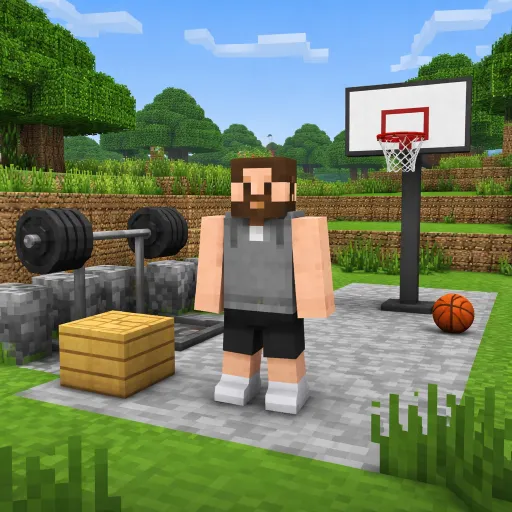
Haptics controls how much you physically feel pain and discomfort. Jason Kelce was pushing through quarter squats with seven plates, ignoring his body's signals that he was overloading his quad muscle. When he tore his quad, his body forced him to acknowledge the physical feedback he'd been dismissing. Now he's learning to listen to those signals rather than override them completely.
Jason Kelce is explaining the training method that ultimately led to his quad injury, showing how he was ignoring his body's warning signals.
"I was doing heavy quarter squats supplemented with jumping on top of a box. So I had well I did seven plates the week be..."

 Haptics
Haptics — Accept that your physical sensitivity has changed and learn new ways to navigate tasks that used to be automatic.
Haptics captures Scott Martin's struggle with the physical reality of his prosthetic hooks. The hooks made every sensation foreign and difficult - he couldn't feel the fork properly, couldn't sense when it was slipping, couldn't judge the pressure needed to hold it. His haptic feedback was completely disrupted, turning the simple act of eating into a frustrating reminder of what he'd lost. The spaghetti sauce everywhere was evidence that his physical sensitivity settings needed major adjustment.
Scott is describing the physical struggle of trying to eat spaghetti with his prosthetic hooks, showing how disrupted his haptic feedback had become.
"to try to manipulate a fork so it comes up to the mouth but then so many times because i didn't know enough how to use t..."
 Haptics
Haptics — Increase your tolerance for uncomfortable emotions instead of avoiding or numbing them.
Haptics. Leila Hormozi turned up her ability to feel discomfort rather than numbing it. When the first person told her to 'fuck off' and she felt like having a panic attack, she didn't run away or distract herself. She sat with the terrible feeling, acknowledged it, and then chose to go back for more.
Leila Hormozi describes sitting in a Whole Foods bathroom after being rejected, feeling like she might have a panic attack but choosing to feel the terrible sensation fully rather than numbing it.
"i remember i ran into the bathroom and i sat on the toilet in health foods yes and i was like i literally think i'm goin..."
 Haptics
Haptics — Use your breath to directly adjust the physical sensations of stress and tension in your body.
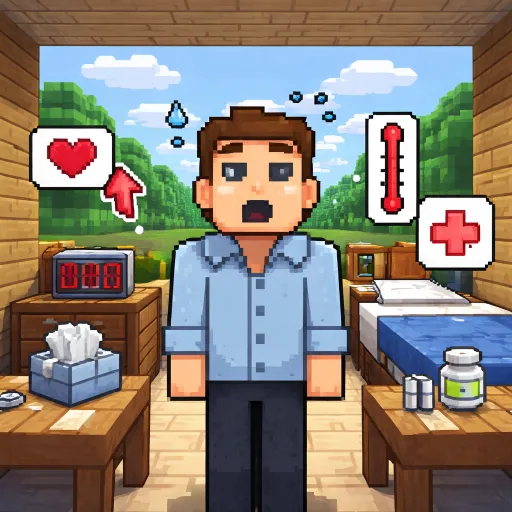
Haptics. James Nestor learned to pay attention to the physical sensations in his body as he breathed, feeling the difference between mouth breathing and nasal breathing. He became aware of tension, anxiety, and brain fog as physical feedback rather than just mental states, using his breath to directly adjust how much physical stress and discomfort he experienced.
The speaker is describing James Nestor's Stanford study showing how breathing pathway creates immediate physical sensations and stress responses.
"here's the finding from the book that i think about every single day nesta participated in a study at stanford where par..."

 Haptics
Haptics — Accept when your body is telling you it's reached its physical limit instead of pushing through.
Haptics controls how much you physically feel. Kayla's body was registering every sensation intensely at festivals - the crowd pressure, heat, sound vibrations - even when she was prepared. She learned to recognize when her haptics were maxed out instead of fighting against her physical responses.
Kayla describes how intensely her body registers festival stimulation despite preparation, learning to recognize when her physical sensitivity is maxed out.
"the thing is is that like i would eat before i would drink water i would be doing all of it and then i would be in the m..."

 Haptics
Haptics — Turn your sensitivity back up occasionally to remember what others are experiencing.
Haptics controls how much you physically feel. Logan Uri had been operating with her haptics turned down for years in her marriage, protected from the sharp sting of personal rejection. When the nanny share family declined to work with her, her haptics suddenly cranked up to full sensitivity, and she felt the full emotional and physical impact of being evaluated and rejected by someone who had gotten to know her.
 Haptics
Haptics — Turn up sensitivity to your body's signals about hunger, fatigue, and what you actually need.
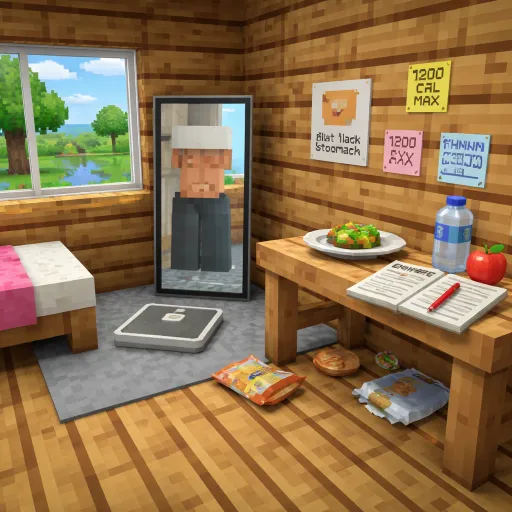
Haptics was turned way down during Lana's eating disorder. She couldn't feel or ignored her body's signals for hunger, fatigue, and the physical damage from restriction. Her body was sending clear distress signals that she had learned to block out in pursuit of weight loss. Recovery involved turning the sensitivity back up to actually listen to what her body needed.
Lana reflects on how her eating disorder involved turning down her body's physical signals and ignoring hunger and distress cues.
"i remember starting to count calories and then going into anorexia at 15 because i thought i was my stomach wasn't flat..."

 Haptics
Haptics — Turn down the physical intensity of guilt and shame by questioning whether the situation actually warrants that level of bodily distress.
Haptics controls how much you physically feel. Becky G was experiencing intense physical symptoms - palpitations, sweating, and panic - because her sensitivity was cranked way up. The shame and guilt were registering as actual physical pain in her body. When her friends showed her that everything was fine, she was able to turn down that physical intensity and actually rest.
Becky G is describing the intense physical symptoms she experienced after waking up from drinking at Disney World, showing how her sensitivity was cranked up.
"i wake up in my hotel room and i'm like wait the sun hasn't even gone down yet like what happened like i was in full pan..."