How much light you bring to what you're looking at. Controls whether you see the hopeful side or the dark side of a situation.
Visualizing_
slider Brightness
Brightness — When something unjust can't be changed right now, show the people you're with exactly why it's wrong rather than just accepting it.
Brightness is about how you illuminate a situation — whether you point toward the dark or the hopeful. Juliet Holmes's mother could have responded to that moment with despair, rage, or silence. Instead she turned the light directly on the absurdity: it's the same water, from the same pipes. That was a Brightness move — not pretending the darkness wasn't there, but showing her daughters that the system's logic was hollow. She lit the lie from the inside.
Juliet recounts her mother's deliberate act of lighting the absurdity of segregation from the inside — letting the girls taste for themselves, then naming the hollow logic plainly.
"she walked over to the fountains one was white white water colored water and she stood and she said betty ann drink from..."
 Brightness
Brightness — Allow yourself to picture a positive outcome without immediately dismissing it — let it sit for a moment before your defenses kick in.
Brightness controls whether a person sees the hopeful side or the dark side of a situation. Ivan Lowe had his brightness turned very low for a long time — not out of pessimism, but out of self-protection. Imagining a future that might not happen hurt too much, so he stopped imagining it. Therapy started nudging the brightness up, just enough to let the idea of a long life enter the frame. He describes the fear of that glimpse vividly, which means the light was starting to reach him.
Ivan Lowe describes how therapy slowly pushed him toward a possibility he had never allowed himself: that he might actually have a future — and how terrifying that realization was.
"going through therapy figuring things out and trying to heal myself yeah it was all building towards the fact that you k..."
 Brightness
Brightness — Identify the realistic best-case outcome before letting worst-case thinking take over your decision.
Brightness controls whether you see the hopeful side or the dark side of a situation. Tim and Carrie League deliberately chose a hopeful frame — if we fail, we go back to engineering and research, no big deal — rather than dwelling on what could go wrong. This wasn't naivety; they fully acknowledged failure was likely. But the overall light they shone on the situation was warm enough to keep them moving. That choice of frame determined how they experienced the whole Bakersfield chapter.
Tim League explains to Guy Raz how he and Carrie deliberately pre-accepted total failure before opening the Tejon Theater, choosing to see the whole venture as an adventure rather than a catastrophe in waiting.
"and we explained this also to our parents and i think this probably takes a little bit of the edge off of it is that we..."

 Brightness
Brightness — Keep one small, joyful anchor in your routine that can interrupt a downward spiral before it takes hold.
Brightness controls whether you can find the hopeful side of a situation. Maya Molina Schaefer, spiraling in a shower trailer in Iraq, had her brightness switched back on the moment the toothbrush started playing. She went from questioning all her life choices to laughing and singing with five other Marines. The silly purchase she'd made before deployment became the thing that pulled her eyes back toward what was still good.
Maya describes the moment in the shower trailer when the toothbrush's song broke through her spiral of homesickness and doubt, pulling her — and five other Marines — back toward joy.
"but one morning when homesickness was hitting me particularly hard i remember standing in that shower trailer staring in..."
 Brightness
Brightness — Look at a past hard period and find what it gave you that an easier path wouldn't have.
Brightness controls whether someone sees the hopeful or dark side of a situation. Nick Green, when asked about the hardest years at Thrive Market, chose to see the difficulty not as damage to be undone but as a necessary part of what made the outcome real. He turned the brightness up on the struggle — not to minimize it, but to recognize its value. Where someone else might look back with regret, he looked back with something closer to gratitude.
Nick Green reflects on what he would tell his 2014 self, concluding that the ignorance and fear he carried into building Thrive Market were not weaknesses — they were the fuel that made success possible.
"oh man i mean i feel like if i had known how hard it was gonna be it would have been hard to even start is the truth wit..."
 Brightness
Brightness — When someone underestimates you, focus on what you're building rather than what they assumed you couldn't.
Brightness controls whether you lean into the hopeful side of a situation or let the dark side take over. When the doctor's face relaxed with relief at hearing Sidhu Gangadhari wasn't Harvard-bound, that moment could have calcified into bitterness. Instead, Sidhu kept the dial tilted toward what was possible — the skills he was learning, the mentor who believed in him, the letter that Doug wrote. He chose to see the gas station as a foundation, not a ceiling.
Sidhu reveals he became a Harvard Medical School professor and reframes the doctor's dismissal, choosing to focus on what was possible rather than letting that flicker of contempt define his ceiling.
"and now that i'm a full professor of surgery at harvard medical school sorry doctor j but i guess i am that kind of mate..."

 Brightness
Brightness — Look for examples of people who faced the same apparent dead-end and ask what they saw that you're missing.
Brightness is about how much light you bring to what you're looking at. When Amazon went pencils down, Jamie Simonoff was looking at the situation through a dark lens — this is the end. Hearing James Dyson describe the moment of wanting to give up as precisely the point where you have to push harder shifted Jamie's Brightness setting and let him see the same situation differently.
Jamie Simonoff describes the moment the James Dyson podcast episode dropped during his Amazon deal crisis — how hearing Dyson's story on a run gave him something to hold onto that shifted how he was looking at his situation.
"and that episode came out and I can still remember being on a run listening to it and thinking like he was my hero James..."
 Brightness
Brightness — Stop forcing a neutral read on something painful and let yourself register what it actually feels like.
Brightness controls whether someone tilts toward the hopeful or the dark reading of a situation. Sayre Quevedo had deliberately dimmed this setting for years — deciding at age 20 that it 'wasn't cool' to still feel hurt about his father, and choosing to feel nothing instead. When he stood across the street from the barbershop and watched his father work, the dimness gave way slightly: he admitted the hurt was real, and also that there was something clarifying about seeing the man just living his ordinary life. He moved from actively suppressing feeling to letting a small amount of honest light in.
Sayre describes standing across the street from his father's barbershop, watching his father's silhouette through the window — the moment he lets a sliver of honest feeling through the years of performed indifference.
"and i felt sort of like you can't do shit to me you know i'm like you don't you're not you can't affect me you can't sto..."

 Brightness
Brightness — Look at a past hard moment and trace everything good that came after it to reset your current view.
Brightness controls whether someone sees the hopeful side or the dark side of what they're looking at. The granddaughter had been reading her present hardship as evidence of permanent failure. After finding her grandmother's journal entry and seeing the full life that followed that one dark moment, she adjusted how much light she was bringing to her own situation — moving from 'this is how it ends' to 'this is just one hard page.'
Jay Shetty describes the granddaughter's overwhelming realization, sitting on her grandmother's floor, of all the light and life that followed the dark journal entry — a direct shift from darkness to brightness.
"she wished she could go back decades earlier and show her grandmother everything that came afterward she would show her..."

 Brightness
Brightness — Look at a past decision and list what you actually did, not just what you wish you had done differently.
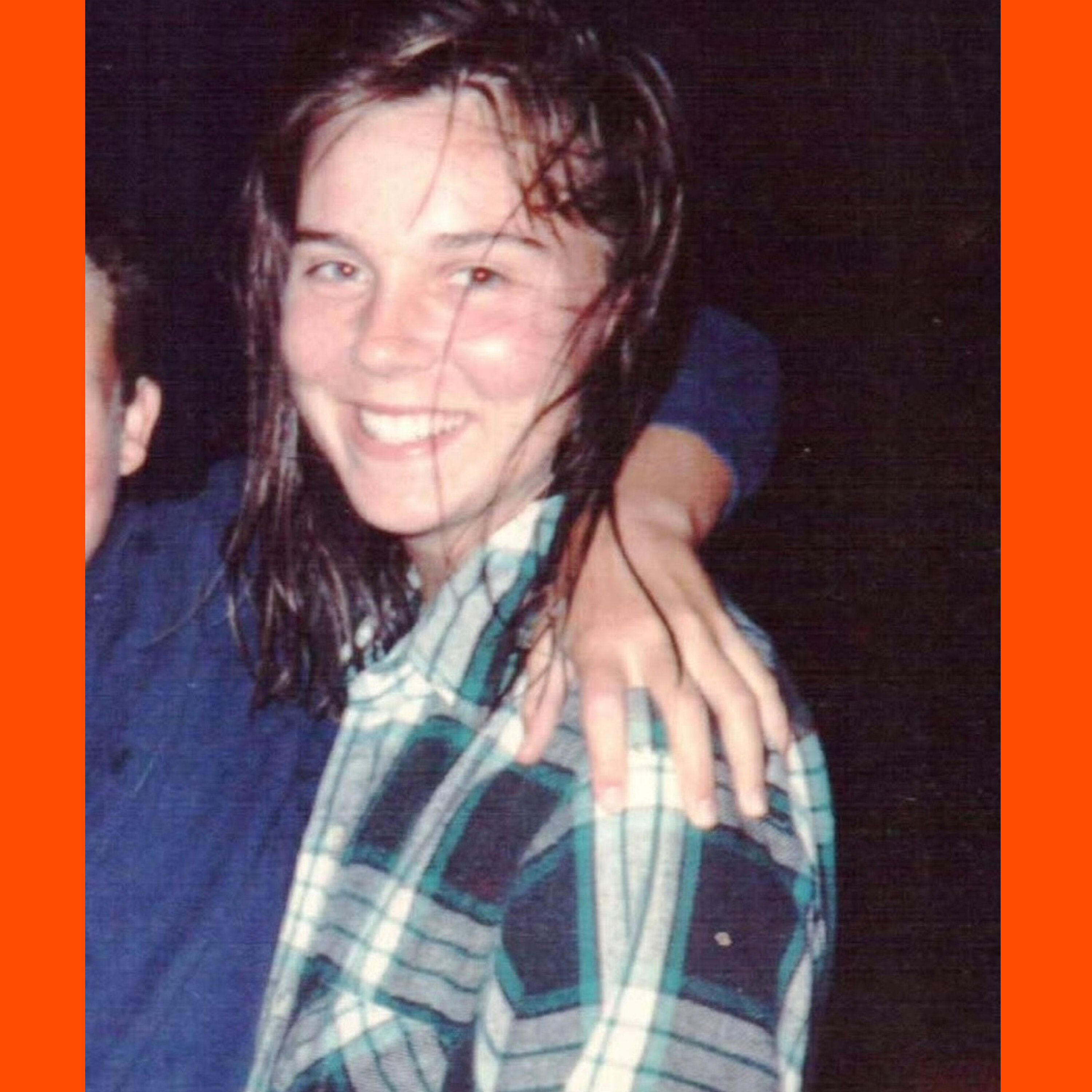
Brightness is about whether you see the hopeful side or the dark side of a situation. For decades, Tamara saw senior year in the darkest possible light — she was the one who failed Bea, the one who looked at her friend askance, the betrayer. When John said she was probably the only person looking out for Bea, that same situation came into a different light. Tamara had knocked on doors, gotten up at 5:30 a.m. to pray, and shielded Bea from gossip — none of which she'd ever given herself credit for. The facts didn't change; the brightness did.
The host realizes that Tamara never told John about the exorcism not out of failure but out of protection — reframing a moment Tamara never gave herself credit for as an act of loyalty.
"while tamara has gotten her best case scenario in that john doesn't remember it's not for the reason she'd hoped john do..."
 Brightness
Brightness — Put in the full preparation first, then let the hopeful read of the outcome guide you through the waiting instead of the fearful one.
Brightness is about whether you see the hopeful or the dark side of a situation. Esther McManus went through the whole night after sending the croissants oscillating between despair and hope. The version that won out — enough to call Julia's phone call a miracle and the croissants' performance a triumph — was the hopeful one. She had put everything she had into preparing for this, including practicing batch after batch every day until the moment of submission. She didn't talk herself out of trying. She leaned toward the possibility that it could work.
Esther describes the moment after dropping off the croissants at FedEx — when the enormity of what she'd done hit her and she swung between despair and hope all through the night.
"then it all hit me i just sent croissant to julia child me this little girl who saw the most basic bread made in the mos..."

 Brightness
Brightness — Look at what has changed in your favor before deciding the outcome will be the same as before.
Brightness controls whether someone leans toward the hopeful or the dark read of a situation. After her divorce, Christy Hawkins had every reason to focus on the worst-case version of putting herself out there again — rejection, humiliation, a repeat of that eighth-grade phone call. Instead, she shifted her lens: she noticed she no longer had the perm, no longer wore the thick glasses, and had survived far worse. She moved from dreading dating to deciding her odds were actually pretty good.
Christy has just finished recounting her divorce and draws a contrast between her eighth-grade self and who she is now, landing on a declaration of hopeful readiness to start dating again.
"i'm trying to look on the bright side i mean i don't wear glasses anymore and i don't perm my hair and i don't wear turt..."
 Brightness
Brightness — When hope for the outcome disappears, redirect focus to what you can still choose about how you show up.
Brightness controls whether someone sees the hopeful side or dark side of a situation. For most of the hijacking, Mike Thexton had kept his brightness reasonably high — telling himself people survive hijacks, that he could stay inconspicuous, that things would probably be okay. When he was brought to the front of the plane, that optimism collapsed. But then he found a different kind of brightness: not hope that he'd survive, but a decision about how to face death with dignity. He turned the dial not toward false positivity, but toward a clear-eyed peace.
Mike Thexton describes kneeling at the front of the hijacked plane, certain he would be shot, and choosing to reach toward connection rather than shut down — whispering a message of love to be passed to his family.
"i felt very frightened but i felt very sad and i think the thing that kept me sane was i felt more sad for my parents an..."
 Brightness
Brightness — Look for the version of this moment you'll laugh about later, and lead with that.
Brightness controls whether you see the hopeful side or the dark side of a situation. Alex Cooper reframed a genuinely rough morning — freezing, stranded, phone dead, smelling like cheap vodka — not as a low point to cringe at, but as a hilarious story worth telling and even a photo worth posting. She turned the brightness all the way up on a memory that most people would bury.
Alex Cooper wraps up the South Boston walk-of-shame story by laughing about going straight to sign language class — and then immediately planning to do it all over again that night.
"i just remember being like i need to i need to get through this sign language class and i need to head on home and i nee..."

 Brightness
Brightness — Shift what you expect from a recurring event so it stops feeling like a test you keep failing.
Brightness controls whether someone defaults to the dark or hopeful read of a situation. Gael had been looking at birthdays through a lens of dread and failure — the day never lived up, people didn't show up right, he felt unseen. Once he reframed the day as an awareness marker rather than a joy event, he started seeing it differently: not as a test he was failing, but as a useful annual ritual. The dial didn't flip to relentless positivity — he still cries, still feels things — but he stopped defaulting to 'this day is wrong.'
Gael is explaining to his co-host why so many people end up hating their birthdays, and landing on his own shift — from expecting joy to expecting nothing in particular.
"i think maybe helps a a lot of us because there's a lot of friends that really hate their birthdays and like it's it's j..."

 Brightness
Brightness — Look at a restriction from the direction it's pointing toward, not from what it's blocking.
Brightness controls whether you see the hopeful or dark side of what you're looking at. Before the conversation, Esther Ngumbi saw her situation as bleak: no earrings, no boyfriend, no place among her friends. Her mother's explanation gave her a different angle to look from. Suddenly the 'no' wasn't the dark thing — it was the bright path. She turned her view toward a future that looked different from what she had been wanting, and it lit something up in her.
After the punishment, Esther's mother sits her down and explains the real stakes — and Esther describes the exact moment the framing flips from deprivation to protection and self-determination.
"at this point she stops punishing me she wants to talk she takes a big sigh she tells me about her girlfriends who had p..."
 Brightness
Brightness — Acknowledge what is hard without letting it cancel out what went right.
Brightness controls whether you see the hopeful or dark side of what you're looking at. Phineas Knowles is staring at a face that, by his own description, lies about who he is — and he names that honestly. But he also finds something real: he completed the rite of passage without a single cut, doing it carefully and correctly. He doesn't pretend the difficult feelings aren't there, but he lets the small success matter. The brightness isn't maxed out, but it isn't off either.
Phineas has just completed his first shave alone, and reflects on the small but real victory of finishing without a single cut — letting that quiet success matter despite everything.
"after twenty slow methodical minutes i rinse off my skin the deed is done and i'm pleased to see that i managed it witho..."
 Brightness
Brightness — Deliberately look for historical evidence that current setbacks have resolved before defaulting to a worst-case conclusion.
Brightness is about how much light you bring to what you're looking at — whether you see the hopeful side or the dark side of a situation. Danny Meyer, staring down Black Friday in 1987 with a two-year-old restaurant, had his Brightness dialed all the way down. What changed over decades wasn't blind optimism — it was earned experience that let him turn Brightness back up even when the numbers looked bad. He learned to see downturns as temporary features of the landscape, not permanent verdicts.
Danny Meyer is answering what advice he'd give his younger self, recalling the moment Black Friday 1987 made him believe his two-year-old restaurant career was already over.
"i think i would tell the young danny meyer not to get too upset when the graph goes down because it's always gonna come..."
Brightness
Brightness — Allow yourself to acknowledge your own contribution clearly without immediately handing the credit away.
Brightness controls whether someone leans into the hopeful or positive read of a situation. Travis Kelce's instinct was to deflect and credit everyone around him — the play calling, the teammates, the quarterbacks. Brightness moving up meant letting himself also see his own contribution clearly and say it out loud: 'when I got the ball in my hands, I'm doing the most I can with it.' He didn't turn it all the way up into ego, but he moved it far enough to claim something true.
Travis Kelce reflects on what the all-time YAC record means to him, moving from reverence for the legends he surpassed to plainly claiming his own contribution to the record.
"i mentioned it to to a few reporters after the game it's like i grew up watching a guy like terrell owens take slants to..."
 Brightness
Brightness — Find one thing worth keeping from the wreckage and build forward from that single piece.
Brightness is about whether you can find the hopeful angle in a bad situation. After one of the most public failures imaginable — buzzed off a national TV stage, told he should be ashamed — Brentley Hilbren chose to turn the disaster into marketing material. He put Howie Mandel's brutal quote directly on Fragile Rock's promotional flyers. The slider moved from seeing failure as shameful proof of inadequacy to seeing it as something worth showing off.
Back in Austin after the AGT disaster, Brentley describes the moment he flipped the failure into promotional gold — turning the judges' most brutal condemnations into tour branding.
"we started putting the judge's quotes on our promotional materials fragile rock totally without merit fragile rock the e..."