Your relationships and how you connect with others. The invisible networks that keep you linked to community and support.
Visualizing_
switch Wi-Fi
Wi-Fi
Wi-Fi — Identify the one relationship that still feels real and let it be the reason you hold on.
Wi-Fi tracks the relational connections that keep someone linked to support and community. Ivan Lowe, bedridden and in agony, was cut off from every environment that had previously grounded him — Afghanistan, protests, disaster zones. The connection to Rebecca was the one signal still reaching him. That single relationship acted as his only live link when everything else went dark.
Ivan Lowe explains that the one thing keeping him from taking too many chemotherapy pills was thinking of Rebecca — not hope for himself, but the inability to justify what his death would do to her.
"from day one rebecca has had my back every trip to afghanistan throughout every traumatic experience she's been there sh..."

 Wi-Fi
Wi-Fi
Wi-Fi — Identify which relationships stay consistent regardless of your circumstances, and invest your trust there.
Wi-Fi tracks how you connect with others and the invisible networks keeping you linked to community and support. Ben Affleck discovered that most of his Hollywood network wasn't actually a support system — it was a signal-strength meter tied to his box office returns. When the movies bombed, the Wi-Fi dropped. When they succeeded again, it came back. He stopped treating those connections as reliable and identified who his real network actually was.
Ben Affleck explains how his Hollywood network evaporated when his films stopped performing, revealing that the connections he thought were solid were tied entirely to his box office value.
"i had a period of time as you point out like where i i got successful really young and i did some movies and then i was..."

 Wi-Fi
Wi-Fi
Wi-Fi — Find a reason to physically show up in shared spaces where low-stakes connection can happen naturally.
Wi-Fi is about the invisible networks that keep you linked to community and support. Marisa Januzzi Thomas had let hers go almost dark — she described keeping friends at arm's length for 20 years. Taking the ice cream truck job forced her back online: friends requested she cruise their streets, strangers danced with her on the sidewalk, a buddy threw pizza into her passenger seat. She didn't rebuild connection through vulnerability or deep conversations — she did it by showing up on people's streets with music.
Marisa describes how the ice cream truck slowly rebuilt her invisible network of friendships — old connections coming back online, one street and one playlist at a time.
"slowly it it was amazing slowly like friendships picked up around the truck my friend lisa asked that i cruise her stree..."
 Wi-Fi
Wi-Fi
Wi-Fi — Keep the small recurring contact going even when conversations feel unproductive, because consistency rebuilds connection over time.
Wi-Fi is about the invisible connections that keep you linked to the people in your life. For Sayre Quevedo and Connor, the signal had gotten very weak — they barely knew where the other was, they had very little shared context, and their different lives had made the connection spotty and unreliable. The deliberate routine of phone calls is them actively trying to boost the signal. The moment Sayre recognizes that Connor's excitement about their father matters — that protecting that excitement is worth something — is the moment the Wi-Fi actually starts working again.
Sayre reflects on the deliberate routine of phone calls he and Connor established to stay connected — the invisible signal they're actively trying to keep alive between their very different lives.
"this routine of phone calls which began a few months ago is your attempt i want drink and drink and eat meals yeah we ha..."

 Wi-Fi
Wi-Fi
Wi-Fi — Set a recurring, structured touchpoint with someone important to rebuild a connection that has drifted too far.
Wi-Fi represents the invisible networks that keep you connected to community and support. Kemp Powers had let his connection to his daughter degrade to almost nothing — sporadic calls, silent car rides, no real contact. The Sunday pact was an intentional act of rebuilding that network from scratch, establishing a regular, reliable signal between them. Over the following years, that connection went from barely functioning to strong enough that she moved back in with him.
Kemp describes the tsunami phone call conversation that cracked open everything — the moment he learned his daughter still had the puppet and still missed him, exposing how broken their connection had become.
"we talked about her piano lessons we talked about her upcoming thirteenth birthday we talked about her now six year old..."
 Wi-Fi
Wi-Fi
Wi-Fi — Prioritize consistent, small acts of genuine attention with people you care about over large but infrequent gestures.
Wi-Fi represents your relationships and the invisible networks that keep you linked to support. Jay Shetty's central argument was that most people have this switch technically on — they're surrounded by people — but the signal quality is poor. Real connection requires being fully present and emotionally available, not just geographically close. He was calling for people to stop coasting on passive connection and actively strengthen the signal.
Jay Shetty describes what active, present connection actually does — distinguishing the signal quality of real relationship from merely being surrounded by people.
"Talking to someone you trust can completely change the way you feel. Maybe you've had one of these days where everything..."

 Wi-Fi
Wi-Fi
Wi-Fi — Invest consistently in a small number of deep friendships rather than spreading connection thin.
Wi-Fi is about relationships and the invisible networks that keep people linked to community and support. Matthew McConaughey's story is centered entirely on the friendship he and Woody Harrelson built across decades — and the realization that this kind of genuine, enduring male connection is something many people are quietly missing. Matthew moved from seeing that bond as personal to recognizing it as something worth naming publicly and protecting deliberately.
Matthew McConaughey reflects on the unexpected reaction Brothers received from audiences — realizing the show was touching something many men quietly lack: permission to value and protect deep male friendship.
"i didn't know that that was a lot of people were running on reserve you know fuel tank with that with understanding that..."
 Wi-Fi
Wi-Fi
Wi-Fi — Stop waiting for connection to come in a familiar form and stay open to it showing up in unexpected places.
Wi-Fi is about the invisible networks that keep you connected to other people. Brian Kett had been effectively offline in LA for a year — no community, no daily human contact, just the muffled sound of neighbors through walls. The Albertsons moment was the first time he got a real signal, and it came from a completely unexpected source. Once he connected with the old woman, a small local network lit up — the big-haired woman, the businessman, the cashier — proving the connection was always possible, just not where he'd been looking.
Brian Kett describes the moment the checkout line erupted into shared laughter and smiles, and how that small spontaneous network of strangers made him feel genuinely connected for the first time in LA.
"and everyone broke out in these smiles and so the big hair woman paid she went on her way and then i paid for my milk an..."
 Wi-Fi
Wi-Fi
Wi-Fi — Find one community where you naturally belong, and let that connection build outward from there.
Wi-Fi is about relationships and the invisible networks that keep you connected to community. Juniper French had almost no real connections — she described years of being super lonely and struggling to make friends. The barn at Strong Creek Ranch became a new network: Natasha who she calls Auntie, Dr. Jen, the whole crew who became a second family. That network then extended outward: through the barn community, she found the confidence and the stability to build friendships at school. The Wi-Fi was essentially turned on at the barn.
Juniper French describes how the barn community at Stone Creek Ranch became a new network of connection that then extended outward into friendships at school — turning her Wi-Fi back on after years of isolation.
"working with the horses has helped juniper make a lot of people friends too there was natasha i call her auntie a bunch..."

 Wi-Fi
Wi-Fi
Wi-Fi — Find one person or group to connect with first, even if it's just one node — the network builds from there.
Wi-Fi was essentially off for Leo when he arrived at his new school. Every connection he'd relied on — friends since kindergarten, a comfortable social place in his old school — was suddenly unavailable. The whole arc of his story was about trying to get back online: finding even one person, Devin, who could serve as the first node in a new network. Making that connection didn't fix everything, but it got the signal started.
Sarah Koenig describes Leo's complete loss of social network when his family moved — the invisible Wi-Fi that had connected him since kindergarten suddenly switched off entirely.
"back in rochester leo had known all his best friends since kindergarten or before they played together at school after s..."

 Wi-Fi
Wi-Fi
Wi-Fi — Schedule low-agenda time with people who don't need you to be performing — consistency with them is more important than the occasion.
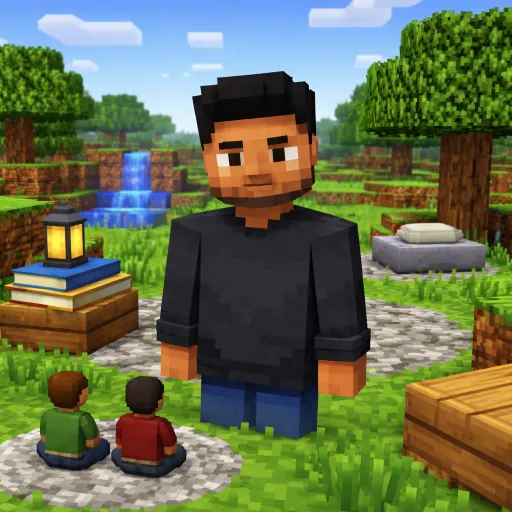
Wi-Fi represents the invisible networks that keep you connected to real support. Jay Shetty was experiencing a year that moved fast and demanded a lot. The friendships that gave him room to be uncertain or tired were functioning as his strongest Wi-Fi signal — keeping him linked to something stable while everything else was shifting. He explicitly names walks, meals, and ordinary phone calls as the moments that helped him slow down and stay present. Those connections were load-bearing.
Jay Shetty identifies the invisible network of close friends whose ordinary connection kept him grounded and present through the fastest, most demanding year of his career.
"Some of the most transformative moments of my year happened during walks, meals, phone calls, and ordinary conversations..."
 Wi-Fi
Wi-Fi
Wi-Fi — Strengthen the existing human connections in your environment before trying to build new ones through technology.
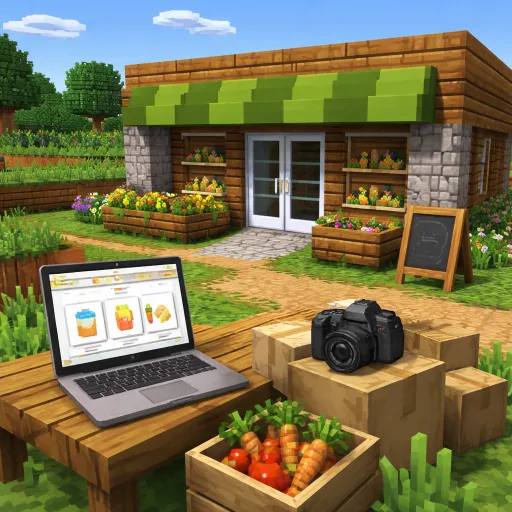
Wi-Fi represents relationships and the invisible networks that keep people connected to community. The Bexley Natural Market is, at its core, a community connection point — a place where farmers talk to shoppers, neighbors run into each other, and people feel embedded in something local. John Groener had been investing in the wrong kind of connectivity (a website) when the store's actual strength was the human Wi-Fi it already had. The advice was essentially to amplify the existing network rather than build a new digital one.
 Wi-Fi
Wi-Fi
Wi-Fi — Reach out directly to one real person in your target industry instead of pushing another application into the void.
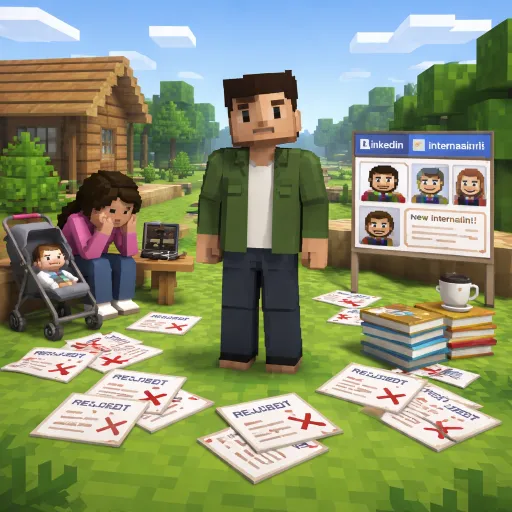
Wi-Fi is about using your connections and networks — the invisible links that actually get things moving. Jay Shetty's breakthrough didn't come from a job board. It came from reaching out to a near-stranger from his university and asking for a referral. That single human connection got him expedited past every cold applicant. He had to actively switch Wi-Fi on by initiating a relationship he'd been too hesitant to pursue.
Jay Shetty shares the personal moment his breakthrough came — not from more applications, but from one direct message to a near-stranger who became his human connection into the system.
"The way I got my role was I reached out to someone who went to my university in my year, but I didn't even know that wel..."
 Wi-Fi
Wi-Fi
Wi-Fi — Share what you are going through with at least one person — you almost never know who is going through the exact same thing quietly.
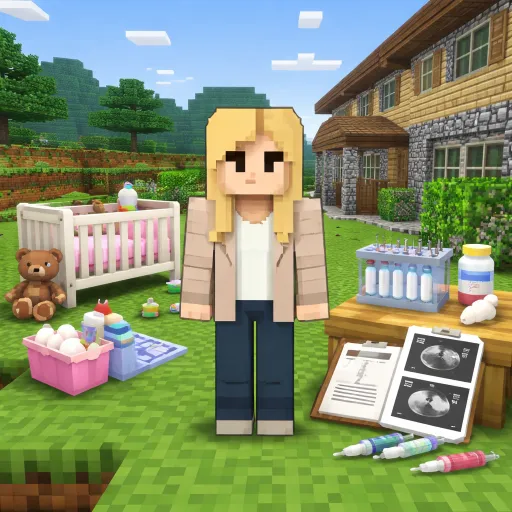
Wi-Fi is about the invisible networks that keep you connected to community and support. Erin Andrews had been going through round after round of IVF largely disconnected from people who understood what that actually felt like. When she finally spoke publicly, the response was immediate — people reached out saying they were struggling too. Players, friends, strangers. She discovered a network that had been there the whole time, just waiting for someone to turn the connection on.
Erin Andrews describes opening up about her IVF journey and discovering the invisible network of people who had been struggling silently around her — the moment her Wi-Fi signal finally found a connection.
"i think a lot of times people weren't comfortable talking about it i remember finally when i was fed up after trial numb..."

 Wi-Fi
Wi-Fi
Wi-Fi — Invest in relationships before a crisis so that when a hard conversation is needed, the trust is already there.
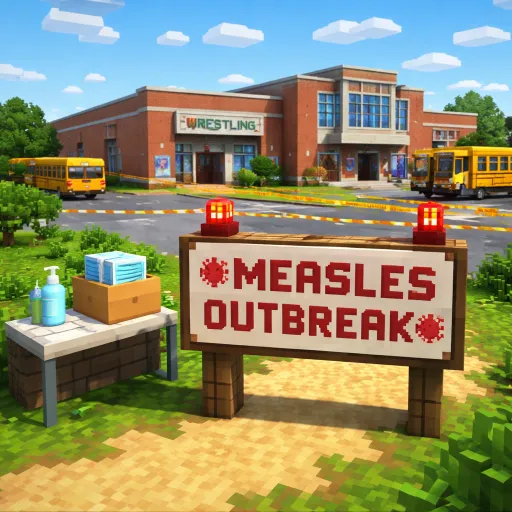
Wi-Fi represents relationships and the invisible networks of trust that keep people connected to support. Meredith had spent 17 years building relationships with parents in this district — kids with feeding tubes, diabetes, asthma. She had earned their trust before the outbreak started. When the measles calls happened, she wasn't a stranger calling with bad news. She was someone parents already knew. That existing connection is what made the conversations land differently than they would have from a principal or a health department official.
Meredith explains the invisible network of trust she had built with families over 17 years — the existing connection that made her measles calls land differently than they would have from a stranger.
"meredith had been working with the school district for seventeen years and was constantly working up close with parents..."

 Wi-Fi
Wi-Fi
Wi-Fi — Test whether the connection you think you've broken is actually broken, or just temporarily disrupted.
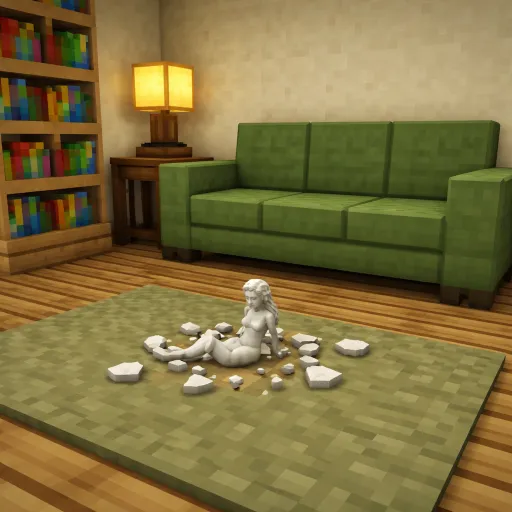
Wi-Fi is about the invisible networks of connection that keep you linked to the people who matter. Bob Byrd had been disconnected twice in one day — cut off by his classmates and his teacher at school, and then convinced that he had severed his connection to his mother by breaking her statue. His mother crawling through mud to reach him was a physical demonstration that the connection was still live, still strong, and not dependent on any object or any behavior to stay intact.
Bob describes the moment his mother physically crossed every barrier — her dress, the mud, the distance — to reach him where he was hiding, demonstrating that their connection was fully intact.
"she showed up in this neighbor's backyard with her little umbrella and she put it down and got on her hands and knees in..."
 Wi-Fi
Wi-Fi
Wi-Fi — Let the people already in your life actually carry some of the load instead of staying connected to them only in name.
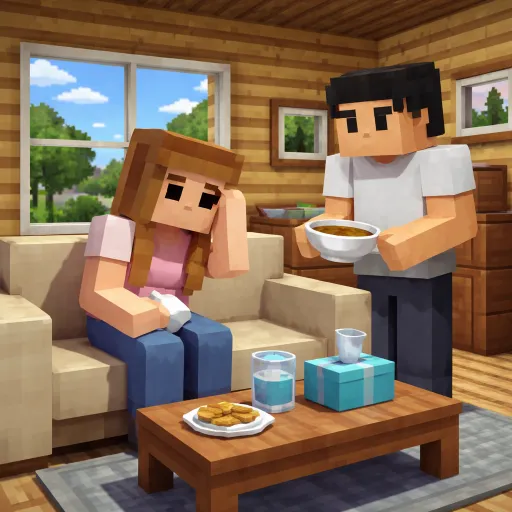
Wi-Fi is about the invisible networks that keep you connected and supported. Taylor Lautner-Dome had been operating with her Wi-Fi technically on but barely used — she was in a loving relationship but routing almost everything through herself. The first trimester forced a genuine connection: she had to let Taylor Lautner in as a real support network, not just a partner she happened to live alongside while doing everything herself.
Taylor Lautner-Dome reflects on how being physically unable to function independently cracked open a deeper connection with Taylor Lautner — turning what felt like a loss of control into an unexpected form of closeness.
"it really made me have to rely on him to do stuff for me and it was the first time like obviously you know he we have a..."
 Wi-Fi
Wi-Fi
Wi-Fi — Identify the one connection that actually keeps you grounded and prioritize maintaining it consistently.
Wi-Fi represents relationships and the invisible networks that keep someone linked to community and support. Crevon Scott was cut off from her physical world — no windows, no outside, months from home. The daily emails from her parents were her Wi-Fi signal. Without that connection, she said she was 'really bad.' With it, she was holding on. The relationship network was the only thing keeping her system online.
Crevon Scott describes how daily emails from her parents became the invisible lifeline — the Wi-Fi signal — that kept her connected to home and made the deployment survivable.
"you know the the hardest part is just missing home the homesick if can i get over that then i'll be alright and when i f..."

 Wi-Fi
Wi-Fi
Wi-Fi — Keep at least one social connection active each week even when the pull to disconnect feels strongest.
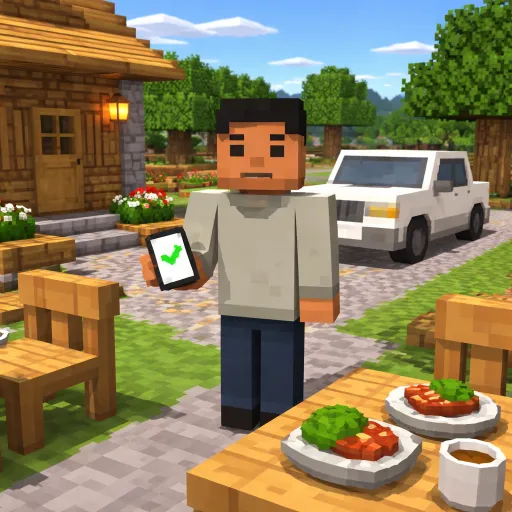
Wi-Fi is your relationships and how you connect with others — the invisible networks that keep you linked to community and support. The dinner scenario Jay Shetty describes is fundamentally about staying connected to the network when every instinct says to disconnect. The person who almost cancelled — and then didn't — kept their Wi-Fi on when it would have been easy to switch it off. And the result wasn't dramatic: it was simply that they felt reconnected to other people's lives, other stories, other concerns. That reconnection is what interrupted the loop and made the drive home feel different.
Jay Shetty explains what really happened on the drive home from dinner — not that problems disappeared, but that the invisible network of other people's lives expanded the mental space enough to shrink the worries.
"that's one of the most powerful things relationships can do they don't always change the facts of our lives but they cha..."

 Wi-Fi
Wi-Fi
Wi-Fi — Actively seek out at least one recurring social space where connection can build over time, separate from professional environments.
Wi-Fi represents the invisible networks that keep you connected to community and support. Jay Shetty moved to new cities and found his social network essentially offline — he had professional contacts but not real friendships. He deliberately worked to bring his Wi-Fi back online by building non-work relationships from scratch, treating connection as something that required active effort to establish.
Jay Shetty is recounting the specific moments he deliberately reached out to build non-work friendships in new cities, describing the awkwardness and the genuine intention behind each connection.
"i remember telling people hey i think we'd make great friends let's hang it was awkward to say it but i said it i rememb..."