Your ability to capture and remember what happens — journaling, reflecting, and preserving moments for future review.
Visualizing_
switch Screen Recording
Screen Recording — Capture what's actually happening in real time, not the version you'll reconstruct later from memory.
Screen Recording is the habit of capturing and preserving what happens for later review. Sayre Quevedo began recording nearly all of his personal phone calls during quarantine, telling himself it was 'for a project.' But the recordings become something more: they catch moments he wouldn't otherwise acknowledge — the drunk walk home, the muttered 'nothing matters,' the careful phone calls with Connor. The fact that he did NOT record the original call where Connor proposed looking for their father is treated in the story as significant. Screen Recording, for Sayre, is the system that holds the truth his conscious mind tries to edit out.
Sayre reflects on the fact that he did not record the pivotal call where Connor proposed looking for their birth father — a revealing gap in a life otherwise obsessively documented.
"you do not record this conversation this is notable if only because so much of your life has been recorded moments far l..."

 Screen Recording
Screen Recording — Actively document and revisit experiences over time so the full picture can emerge when new information arrives.
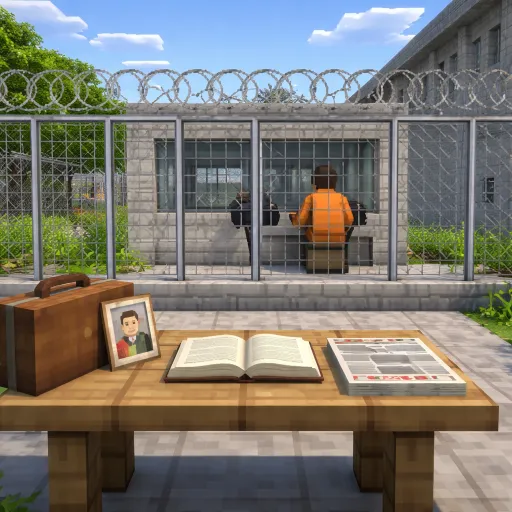
Screen Recording is about capturing and preserving what happened for future review — using memory and reflection to make sense of experience over time. Mike Thexton had been mentally recording the hijacking for thirty-six years: telling it to negotiators, writing it in a book, replaying it at the trial. The phone call from federal prison was a final act of recording — filling in the gaps so the full story could finally be preserved accurately. He'd kept the record running for decades specifically to reach this moment.
Mike Thexton describes the decades-long act of screen recording — telling and retelling the story to negotiators, commandos, and trainers — preserving every detail of the twelve hours so the full account could eventually be complete.
"i think the most important thing for me i was able to tell the story not just to journalists journalists they would say..."

 Screen Recording
Screen Recording — Tell one trusted person what happened so you have an outside reference point if the pattern repeats.
Screen Recording is about capturing what happens — preserving moments for future review so you can see patterns clearly. Alex specifically told the listener to tell one friend, essentially creating an external record of what happened. If it happens again, she won't be starting from scratch trying to remember whether the first time was 'really that bad.' She'll have a witness. Alex's advice was essentially: record this moment so you can reference it later.
Alex Cooper tells the listener to tell one friend about the incident — creating an external record so the memory can't be quietly minimized if it happens again.
"maybe tell one of your friends and i know it's early and you're five months in so you're probably sharing all the good s..."

 Screen Recording
Screen Recording — Go back and look at actual records from a period you've avoided — photos, videos, journals — and let yourself see what was really there.
Screen Recording is about preserving and reviewing what actually happened — capturing moments for honest reflection later. Bridget Marquardt had effectively turned this off for years, not looking back at footage or photos from the mansion period. When she started the rewatch podcast with Holly Madison and picked up the Girls Next Door photo book, she was finally turning the recording back on — and what she saw in her own smile shook her enough to get emotional on camera.
Bridget Marquardt explains how the rewatch podcast and book-writing are functioning as a form of recording and reviewing what actually happened — surfacing things she had completely blocked out.
"think doing this pod not this podcast but our holly and i's podcast is helping me like mhmm look back on some of the thi..."
 Screen Recording
Screen Recording — Write out the full arc of what you have built when doubt sets in, so you can see the actual distance between where you started and where you are.
Screen Recording is the ability to capture and preserve what has happened — reflecting on it to create clarity for the future. After Kim Vaccarella turned down the $100 million offer and spiraled into depression, she sat down and wrote 35,000 words about her journey from the beginning to the present. That act of recording and reviewing her own story was what helped her see her own value clearly for the first time. It moved her from paralysis back to conviction.
Kim describes the depression spiral after turning down the $100 million offer and how she responded by sitting down and writing 35,000 words — a complete record of her journey that shifted her self-assessment.
"i decided after christmas and in the early part of the the new year to not do the deal and that sent me into a spiral an..."
 Screen Recording
Screen Recording — Put the thing you keep carrying into written form so your mind can release it instead of continuously reprocessing it.
Screen Recording is the setting Pam finally activated fully when she wrote her book. She had been living with these memories for sixty-plus years, but they existed only inside her — unorganized, unexamined, never fully captured anywhere external. Writing the book was the act of recording everything: putting the experiences into a fixed, preserved form she could actually look at, set down, and step away from. The process was excruciating precisely because she had to relive it in order to record it — but the recording is what allowed her to stop replaying it.
Pam describes the writing process itself — three months of reliving everything in order to finally capture it in a fixed external form she could step away from.
"so i sat down and started writing this book and on june 1 and on august 30 three months later i finished the book i wrot..."
 Screen Recording
Screen Recording — Replay key moments from a failure with the specific goal of finding what you personally could have done differently.
Screen Recording captures and preserves what happened for honest future review. Tom Brady described going back to games he lost — including Super Bowls — and methodically reviewing what he could have done differently on the sideline, in his leadership, in his execution. That practice of deliberate review is Screen Recording in action: capturing reality as it was, not as it felt, and using it as material for improvement.
Tom Brady describes going back to the Eagles Super Bowl loss and reviewing it through the lens of his own actions — a deliberate practice of capturing what actually happened rather than accepting the softened version people offer after a loss.
"that game i took the same approach in my mind like it doesn't matter what the team did what can i what could i have done..."

 Screen Recording
Screen Recording — Document pivotal moments and wisdom so you can replay them when facing similar challenges.
Screen Recording allowed Miles Chamley Watson to capture and preserve Kobe Bryant's wisdom about memory and performance. After his Olympic disappointment, Miles internalized Kobe's quote about the best athletes having the shortest memory and tattooed it on his leg. This moment became a reference point he could return to whenever facing future setbacks.
Miles describes the exact moment Kobe Bryant shared his philosophy about forgetting wins and losses, which Miles then tattooed on his leg as a permanent reminder.
"he told me this quote i'll never forget it i got tattooed on my leg he says the best athletes have the shortest memory y..."

 Screen Recording
Screen Recording — Document small daily actions to create visible proof of progress and meaning.
Screen Recording shows how Kristen Miller-Song created the Honor Wall as a way to capture and preserve her daily acts of love for Ethan. Rather than letting grief consume her without any record of progress, she documented each small step forward as a way of honoring him. This practice of recording her efforts helped her see that even tiny actions - getting out of bed, walking the dog - were meaningful expressions of love and remembrance.
Kristen Miller-Song creates the Honor Wall as a way to document and preserve her daily acts of love for Ethan's memory.
"every night i'd say to myself how did you honor ethan today the first tasks were get out of bed walk your dog some days..."
 Screen Recording
Screen Recording reflects Matt Damon's realization that he hadn't been capturing or preserving the everyday moments with his children. When he brushed his daughter's hair, he was suddenly recording the experience in a way he hadn't done in years - really seeing it, feeling it, and understanding its significance. He shifted from letting precious moments pass unnoticed to actively capturing and remembering them so he could appreciate their value.
Matt Damon reflects on suddenly becoming aware of how precious moments with his children slip away unnoticed.
"I ran the hairbrush through her hair and it's the same... and it buckled me man... so don't blink."

 Screen Recording
Screen Recording represents Sarah J. Maas's ability to capture and remember what happened during her traumatic birth experience for future reflection. Years later, she was able to process these memories through her writing, using the details of feeling powerless and scared to create authentic characters going through similar experiences.
Sarah reflects on how a small act of kindness from a medical intern became a preserved memory that helped her process her traumatic birth experience.
"That meant so much to me that day, that moment of kindness. And like I hope like she she probably has no idea that she h..."

 Screen Recording
Screen Recording captured Miguel's decision to actively preserve and examine his WeWork experience instead of just letting it fade away. He could have chosen to let those memories pass and move on, but instead he's constantly reflecting on what happened, journaling through conversations with entrepreneurs, and using those preserved insights to help others navigate similar challenges.
Miguel is reflecting on how he continues to process and share lessons from his WeWork experience.
"i still look back a lot it obviously played such a huge role in my life and i get the opportunity to talk about it not p..."
 Screen Recording
Screen Recording helped Javier capture and hold onto the truth of what had happened with Patricia, Carla, and Chino. For twenty years, he'd been letting the significance of their love pass right by him, unable to process what it meant. Writing his memoir switched on Screen Recording - he could finally replay those moments and see clearly what had developed between them. This wasn't just temporary survival bonding; this was real love that proved he was worthy of deep connection.
Javier is describing the moment he finally recognized the genuine love between himself and his travel companions as they said goodbye in Tucson.
"In that goodbye, in that warehouse, I realized because they were family, that I loved them. And I knew that they loved m..."

 Screen Recording
Screen Recording helped Joe transform his relationship with the security footage. At first, he was in Letting It Pass mode - avoiding the video, not wanting to see it, letting others describe it to him. But when he finally watched it, he had to switch to Reflecting mode. Screen Recording let him examine the footage not as something that happened to him, but as evidence of his survival story. Instead of the video being a source of trauma about what almost happened, it became a tool for gratitude about what didn't happen. He could watch his own near-death experience and choose to see proof of his resilience.
Joe is explaining how he transformed his relationship with the viral video of his attack from something traumatic into a source of motivation and gratitude.
"So that video will stay with me for probably the rest of my life. And in some aspects now, when I see it, it's a powerfu..."
 Screen Recording
Screen Recording helped David transition from just enduring the weirdness of being a human display to actively observing and processing what was happening to him. At first he was letting the humiliation and absurdity just wash over him, trying to maintain dignity. But Screen Recording let him step back and capture the strangeness — the way people waved at him like a zoo animal, the media attention, the real therapy happening in fake circumstances.
David describes the moment he realizes he's capturing and preserving these therapeutic interactions in the window.
"When I sit there, a patient on my couch, pipe in my mouth, listening, it feels so perfect."
 Screen Recording
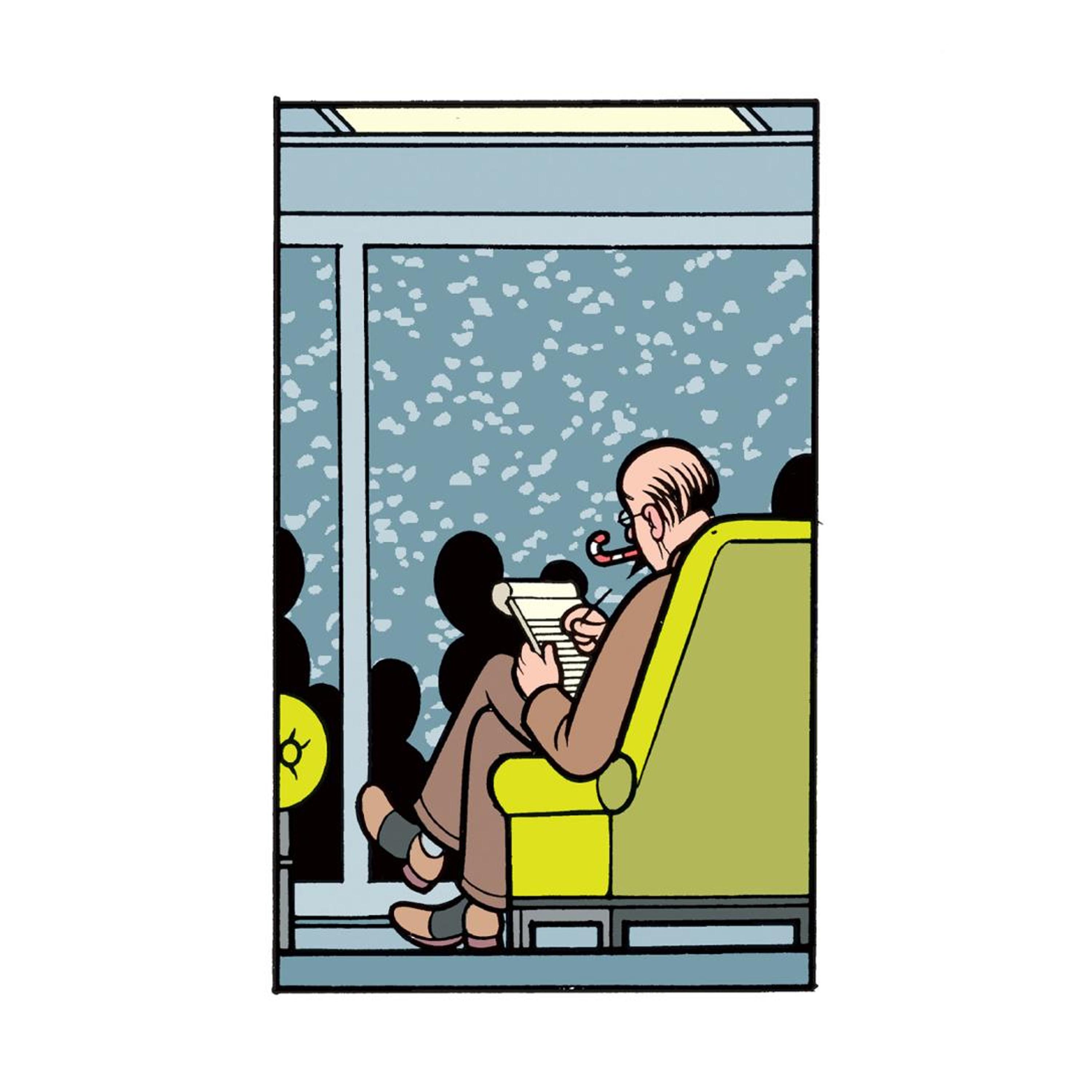
Screen Recording helped David shift from letting the humiliation of elf work just wash over him to actively capturing and reflecting on what he was experiencing. Instead of just enduring the daily parade of forced merriment and strange customers, Screen Recording let him step back and observe it all with the eye of a writer. He started recording these moments mentally, turning his embarrassment into material, his frustration into stories worth telling.
David starts improvising his own lines at the Magic Window instead of the required script about seeing Santa.
"Step on the magic star and you can see Cher. Step on the magic star and you can see Mike Tyson."