How much you hold onto — thoughts, emotions, relationships, experiences. Can be overloaded or carefully curated.
Visualizing_
gauge Storage
Storage — Audit everything you're carrying and cut anything that isn't directly driving the results that matter most.
Storage is about how much you hold onto — and whether that load is carefully curated or just overloaded. Mercedes Smith had taken on an enormous amount: a full performing career, a growing product line with many SKUs, social media content creation, product design, and business operations. Her storage was maxed out. The advice she received — focus on fewer SKUs, identify the 20% of inputs driving 80% of outcomes — was essentially a directive to clear storage and keep only what actually moves the needle.
Guy Raz gently names what Mercedes has been carrying — that she may be treading water — and she admits, with a slight laugh, that it's more than a little true, in the moment she stops defending the overload and starts hearing the advice.
"and i'm sure you probably feel a little bit sometimes like you're you're just treading water right a little bit yeah may..."

 Storage
Storage — Organize what you hold internally by attaching emotion or spatial structure to it so it stays accessible under pressure.
Storage is about how much a person holds onto and how it is organized internally. Bob Milne's storage is operating at an almost incomprehensible capacity — he memorized four full symphonies in just a couple of days and held them with such fidelity that he could report back on the exact phrase playing in each one after tracking them simultaneously in an MRI. His storage isn't just large; it's organized spatially, emotionally, and sonically in a way that keeps everything accessible without interference.
Bob Milne recounts the MRI experiment in his own words — describing how he held four full symphonies simultaneously in his head and was confirmed by neurologist Kirsten Betterman to be exactly right on every note.
"they put me into the mri and they they asked me start tune one in your head so i did then roughly ten fifteen seconds la..."

 Storage
Storage — Pull out something you've been carrying for years and ask if the version of events you stored was ever the full picture.
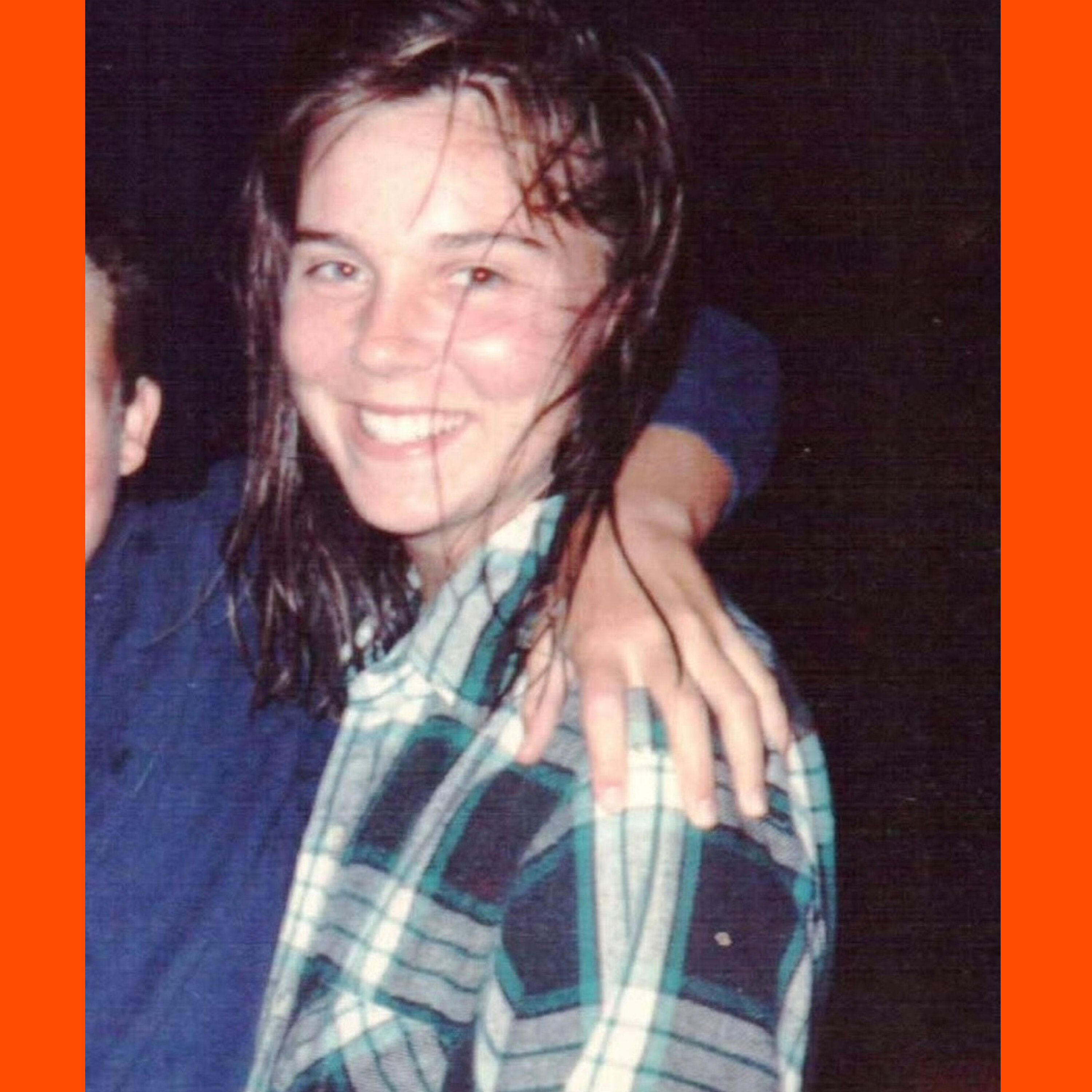
Storage is about how much you hold onto. Tamara had been carrying this event — crystallized, unresolved — for nearly 30 years. She described it herself as something "lodged inside" her, hardened into a fixed shape. The guilt over Bea, the guilt over her father's death, the memory of the exorcism — all of it packed in and never processed. The conversation with John didn't delete the files, but it gave Tamara a way to finally re-examine what she'd been storing, and whether it deserved the space it had been taking up.
Tamara opens her yearbooks and discovers the painful contrast between a junior year full of love and a senior year page that was reserved for Bea but left completely empty — a physical artifact of everything that went unsaid.
"you know the other night i got out my yearbooks mhmm i actually have them here with me and then in our senior yearbook i..."
 Storage
Storage — Let go of a past identity that no longer fits instead of spending energy trying to get back to it.
Storage is about how much you hold onto — experiences, identities, old versions of yourself. Sonia Morgan had been carrying the weight of her former life — the wealth, the status, the lifestyle — as a reference point for who she was supposed to be. The shift she describes is essentially clearing that storage: she's no longer holding the old life as a standard to return to.
Sonia describes finally clearing the weight of the life she used to have — recognizing it attracted the wrong people and stopping the practice of carrying it as a standard to return to.
"even as a very young girl i had people around me that wanted access and then when you marry into a certain family and yo..."

 Storage
Storage — Identify a story from your past that you've been carrying unchanged for years and ask whether new information could update it.
Storage is about how much you hold onto. Both Alan Newman and Jeffrey Hollander held onto their versions of this story for nearly 30 years. Alan held onto the shock and betrayal of the Dear John letter. Jeffrey held onto the feeling of abandonment. The Storage was full of old hurt that neither man had fully processed. What the podcast conversation forced — and what Alan's Bobby Brown insight created — was a kind of clearing: a way to set down the version of events they'd been carrying and pick up something more complete.
Jeffrey Hollander is describing how the silence during Alan's sabbatical allowed both men's separate narratives to calcify — two versions of events stored separately, without the contact that might have corrected them.
"so it's so hard because we didn't talk during his sabbatical at least i don't think we were talking during your sabbatic..."
 Storage
Storage — Audit what you've been holding onto versus what you've quietly set aside to make life easier.
Storage captures exactly what happened here. Nikole Hannah-Jones had been holding a carefully curated version of events — one that supported the argument she'd made publicly. The old emails revealed she had stored the raw, painful version of events too, but had let it slip into the background. Reading them back forced a full audit of what she'd actually been carrying versus what she'd allowed herself to remember.
Nikole Hannah-Jones describes discovering pages of old emails she had written and then entirely forgotten — a detailed archive of real-time distress she had somehow stored away and never fully processed.
"there's like pages of emails i don't even remember sending that many emails and i'm a writer and i'm a journalist so my..."

 Storage
Storage — Regularly check what you're still carrying that no longer needs to be held — and choose to set some of it down.
Storage is about how much you hold onto. Lucy Hale had been storing years' worth of shame, regret, and self-blame — carrying it with her even through sobriety. The shift wasn't clearing storage all at once but becoming aware of how much space all of that was taking up and starting to decide, intentionally, what was worth keeping and what needed to be released. A random text could still fill her storage back up, which is why she describes it as a daily process.
Lucy Hale is revealing how shame doesn't just disappear — it lives in storage and gets retriggered by a random text or memory, which is why self-forgiveness has to be chosen again and again.
"forgiving myself is a daily a daily choice because i'll be doing okay i'll be doing okay i'll be doing okay something wi..."

 Storage
Storage — Set aside time to revisit a period you've mentally archived and check whether what you stored matches what actually happened.
Storage is about what you hold onto and what you bury. Bridget Marquardt had filed the mansion years away as mostly positive, holding onto only the manageable pieces. The podcast and book-writing process started pulling things back out of storage that she had sealed off — episodes she had completely forgotten, editing choices she had blocked out, and feelings she thought she'd resolved. The discovery of the fake smile in the photo book is exactly the moment when something buried surfaced.
Bridget Marquardt describes what came out of storage when she started rewatching the show — memories she had completely sealed off resurfacing and shocking her with their weight.
"i told holly when she first asked me if i wanted to do this podcast of recapping the show i was like oh yeah i have grea..."
 Storage
Storage — Identify which memories or versions of yourself you're storing out of grief rather than usefulness, and consciously reduce how much space they take up.
Storage is about what you hold onto — and whether what you're storing is helping or overloading you. Ashley King was holding onto Sighted Ashley like a file she refused to delete, and it was taking up so much space that there was no room for anything new. She replayed the night she was poisoned over and over, asked herself what she could have done differently, and kept returning to the grief of the life she thought she'd lost. Over time, she began letting go of those loops — not forgetting, but no longer letting them dominate — which created the capacity to imagine a future.
Ashley describes the relentless loop of replaying the night she was poisoned, trying to figure out what she could have done differently, and feeling completely isolated with no one who understood her experience.
"i was angry at myself because i would replay that night in my head like what would i have done differently could i have..."
 Storage
Storage — Examine what you've been storing for years and ask whether the reason you originally held onto it is still actually true.
Storage is what you hold onto — and how long you hold it. Oprah Winfrey carried shame about her childhood abuse for over 33 years. Even when she became a public advocate for survivors, even when she intellectually knew the facts, the shame stayed stored. What she was storing wasn't just a memory; it was a verdict she had passed on herself as a child. The moment in the interview when she understood the abuse was premeditated was the moment that verdict was overturned — and the item could finally be deleted from storage.
Oprah describes the specific shame she had stored for decades — blaming herself for 'letting' the tickling happen — and the moment that item was finally overturned when she understood it had been deliberately planned.
"and so the tickling that i had for years blamed myself because i let him tickle me he started tickling the bottom of my..."
 Storage
Storage — Regularly release what you've been holding rather than compressing it until the system fails under pressure.
Storage is about how much you hold onto — and whether you're overloaded. Tom French had been deliberately storing his grief, filing it away and not letting it surface because he believed that was his job. Week after week in the NICU, he compressed fear and sorrow into a locked folder. The drive home after Juniper's surgery was when storage hit capacity. The Harry Potter thought was the file that wouldn't compress. The system crashed — he had to pull over. That's what a full storage gauge looks like when it finally trips.
Tom French describes the Harry Potter thought that finally cracked open the emotional storage he'd built up — a single unbearable image that unlocked everything he'd been compressing for weeks.
"and tom says they were in the car around the time of the surgery as we're driving you know by that time junebug and i we..."

 Storage
Storage — Decide which old stories you are actively maintaining, and ask whether the space they take up is worth what they cost you.
Storage tracks how much you hold onto — old experiences, grievances, hopes. G.J. Echternkamp had been storing a version of his childhood story for decades: the one where Frank was the villain and his mom was the victim who just needed rescuing. That story took up enormous space. When he finally hit his limit and left for New York, he started offloading it — not by resolving it, but by deciding it no longer had to live in the center of everything he did.
G.J. describes the moment he finally stopped carrying his mother's story as a problem he needed to solve — a decisive offloading of decades of stored hope.
"i realized i was never gonna get it i just couldn't wrap my brain around it and i wasn't i no longer cared and i think t..."
 Storage
Storage — Identify the reputation-based fear you're carrying and consciously set it down before making the real decision.
Storage is about what you hold onto and what you let go. Jason Kelsey was holding onto the weight of how the injury would be perceived — the imagined voices of old-school football dads calling him soft. He had to drop that before he could make a clear decision. Once he let go of carrying that social judgment, he could act on what was actually true about his body and his season.
Jason Kelce is explaining the impossible choice he faced — season-ending surgery or cutting the tendon out entirely — and naming out loud the social shame he had to let go of to make the call.
"i had to decide whether i was gonna go on ir for a full season to just cut the tendon out of my finger there was no in b..."
 Storage
Storage — Look for experiences that give long-held pain a safe place to surface without requiring you to explain or justify it.
Storage is about how much you hold onto — pain, experiences, emotions — and whether that storage is overloaded. Betty had been holding an enormous amount for decades: abuse, violence, poverty, grief, all of it compressed and kept out of sight. Her system was full. The Dolly Parton song didn't empty it, but it gave some of that stored pain a place to move — out through tears, out through the words 'it's hurtful when people make fun of you.' That release, small as it was, was significant because it happened so rarely.
Betty breaks down crying while listening to 'Coat of Many Colors' in the living room, releasing decades of stored pain as she connects the song's shame to her own childhood.
"sorry guys you know it just brings back so many memories doug what is it what do you think of i think about my grandma s..."

 Storage
Storage — Recognize when you're holding more than your system can sustain and find an external structure to move it into.
Storage is at the center of this story. Pam had been holding onto sixty years of unprocessed experience — the abuse, her sister's illness, her father's death, decades of silence. Her internal storage was at capacity. Writing the book was the act of offloading: moving everything out of active memory and into an external container. When she put the book down and said she was done, she wasn't pretending the past didn't happen — she had transferred it somewhere she didn't have to keep holding herself.
Pam describes what happened when she finally finished writing — the moment she transferred sixty years of internal weight into something external and declared herself free of it.
"it was just like the most cleansing thing i've ever done and at the end of the book it was like i had cleansed my soul i..."
 Storage
Storage — Find a structured way to move what you're carrying out of your head and into a form you can set down and walk away from.
Storage reflects how much Pam held onto over the years. She carried the full weight of what was happening to her — the abuse, the fear, the confusion about her father's death, her sister's condition, the secret of her parents' divorce — without being able to put any of it down or share it with anyone. For decades she held all of it. The writing of her book, which she describes as "the most cleansing thing I've ever done," was the moment her storage was finally offloaded — not deleted, but moved out of active memory and into something external.
Pam describes the decades of weight she carried silently — a story held inside her entire adult life, waiting for the moment it could finally be released onto the page.
"i turned 65 in july my sister lola passed away in october and i had always wanted to write this book but i would not wri..."
Storage
Storage — Express what you've been holding even when there's no one to receive it — the release comes from the act of saying it, not from being heard.
Storage measures how much you're holding. The caller was carrying grief, betrayal, shock, and unspoken words all at once — an overloaded system with no outlet. The wind phone framing Jay Shetty offered — say it anyway, just to get it out — was a direct instruction for clearing Storage. The caller had been holding things she needed to say to her husband, but the absence of a recipient kept those things locked in place. Releasing Storage didn't require him to be there. It required her to speak.
Jay Shetty tells the widow she should say everything she's been holding to her late husband — not because he'll hear it, but simply to clear the emotional storage that has nowhere to go.
"you want to offer forgiveness probably some fury maybe some love underneath despite how hurt you are you want to say all..."

 Storage
Storage — Stop compressing difficult experiences into silence — give each one a name and a place before it builds pressure.
Storage is what she was managing — badly — for most of her life. She described her method explicitly: squeeze everything into the smallest ball possible, swallow it down, and pretend it doesn't exist. She did this with the assault, with her husband's affairs, with her own rage and grief. Her storage was so overpacked that it eventually caused a system-wide failure. Therapy was essentially the process of going through everything she had stored and finally sorting it.
She describes the storage method she invented at age eleven standing at the top of the stairs before dinner — the same method she would use to absorb her husband's affairs and everything else for the next three decades.
"i kind of had this very odd physical sensation of almost i just call it stuffing because i ended up doing that the rest..."
Storage
Storage — Let go of a physical object you've been using as a stand-in for something you're actually afraid to release emotionally.
Storage is about what you hold onto and what you let go. Michael Ivory had been holding that $100 bill the way you hold onto an object that feels sacred — not because of what it was worth, but because of what it represented. The act of finally spending it wasn't just a financial transaction. It was releasing the last physical thing his grandmother had touched. The shift was learning that letting go of the object didn't mean losing the connection.
Michael Ivory describes the moment of letting go — handing over the $100 bill at the register, the last physical object his grandmother had touched.
"i picked up my wallet and went to the grocery store prepared to do this very thing i didn't want to do bought the ingred..."

 Storage
Storage — Choose deliberately what you keep from painful chapters — hold the moment of pride, not just the record of the loss.
Storage is about what you hold onto. Glenn Burke, stripped of his career, his health, and his public recognition, chose to hold onto one specific thing: the memory of that feeling on October 5th, 1977. He didn't fill his storage with bitterness about being traded, mocked, or forgotten. He kept the origin of the high five — the sensation of it — as something he carried with him all the way to the end. That selective storage is what let him speak about it with pride instead of grief.
Jon Mooallem reflects on what Glenn Burke held onto through a life that unraveled — stripped of his career, his health, and his public recognition, he carried one specific memory all the way to the end and spoke about it with quiet pride.
"glenbrook died in 1995 but what he's left with at this point is he's left with the original high five right that's his c..."