Knowing when to fully disconnect for safety, clarity, or self-preservation. A total systems safeguard.
Visualizing_
mode Airplane Mode
Airplane Mode — Recognize when staying connected to something you love has become the thing most likely to take you out.
Airplane Mode is about knowing when to fully disconnect for safety and self-preservation. For years, Christian Estevez kept his connection to Plainfield live — going back on breaks, staying on Mikey's couch, throwing down in gang fights. That connection was real and meaningful, but it was also the thing that was going to get him killed or locked up. When Mikey told him it was time to go, Christian finally turned the signal off. Not because the people weren't real, but because staying connected was now a systems threat.
Christian sets the scene of the rainy night in Mikey's car — the moment Mikey pulled him aside and named the reality Christian had been refusing to fully see.
"mike comes up to me and says come with me let's take a walk i have to talk to you so we leave the party and we go outsid..."

 Airplane Mode
Airplane Mode — Identify which commitments or inputs are pushing your system past its limit and disconnect from them completely, even temporarily.
Airplane Mode is knowing when to fully disconnect for safety, clarity, or self-preservation. Benny Blanco's breakdown was the moment his system demanded he go fully offline — agoraphobia, physical tics, inability to function. His recovery required him to set hard limits: no work past a certain time, building in rest, going to therapy. He didn't just slow down; he had to shut certain systems off entirely in order to stabilize.
Benny Blanco is describing the hard limits he set after his breakdown — the moment he switched from hiding everything to drawing a firm boundary around his mental health.
"i started seeing a therapist and started doing cognitive behavioral therapy and i started getting my life in order i sta..."

 Airplane Mode
Airplane Mode — Limit outgoing signals about a situation until you are ready to act on it directly.
Airplane Mode is about going fully internal when the outside world becomes too much to engage with. Marie Jollette, facing the likely end of her 12-year career due to TPS termination, made a deliberate choice to keep her immigration status completely private from coworkers. She shut off any incoming or outgoing signal about her situation — even while her colleagues were openly discussing TPS in the break room, she stayed silent and kept working. She was fully disconnected from the emotional noise around the issue, running only on what she needed to do her job.
Hannah catches Marie in the hallway and asks why she hasn't told her coworkers about her TPS status — Marie explains her deliberate silence, going fully offline about the most consequential thing happening in her life.
"I have not said anything I have not so you haven't talked to people here about it no I don't want to talk to them about..."
 Airplane Mode
Airplane Mode — Recognize when removing yourself from a situation entirely is the only move that keeps you intact.
Airplane Mode is a total systems safeguard — knowing when to fully disconnect for safety and self-preservation. Bella Thorne reached a point where staying connected to her home environment was actively threatening her survival. Leaving with no ID, no bank access, and no plan was not recklessness — it was a full disconnect from a system that was damaging her, executed as an act of self-protection.
Bella Thorne describes the moment she realized she had to fully disconnect from her home environment — not out of anger, but because staying was threatening her survival.
"i thought at one point like if i had hurt myself that maybe she would see how much pain i was in and i knew when i was t..."

 Airplane Mode
Airplane Mode — Cut off all the inputs that are feeding the spiral at once rather than trying to manage them one at a time.
Airplane Mode is a total systems safeguard — a full disconnect for safety and clarity. Millie Bobby Brown went cold turkey on social media, cut out soda, picked up a grounding hobby, and eventually traveled to Japan to sit in silence with monks. This wasn't a gradual scaling back — it was a deliberate, complete shutdown of the inputs that were feeding her anxiety. She removed herself from the system entirely until it stabilized.
Millie Bobby Brown describes the full-stop moment when she traveled to Japan to sit with monks — the complete systems shutdown that finally broke her three-month anxiety cycle.
"i got chased by somebody in a place and it sent me into a three month long anxiety panic attack where i had to do all of..."

 Airplane Mode
Airplane Mode — When external pressure to keep going outpaces your actual capacity, give yourself permission to fully disconnect before making the next move.
Airplane Mode is the decision to fully disconnect for self-preservation — a total systems safeguard. Maria Georges made the decision to go home to Toronto, step away from the public-facing world she had just entered, and stop the inbound flood of expectations, excitement, and pressure. Turning down the Bachelorette was essentially activating airplane mode on an entire chapter before it could take her somewhere she wasn't ready to go.
Maria describes the moment she turned down the Bachelorette and went back to Toronto — fully disconnecting from the public world she had just entered in order to protect herself.
"everyone was so excited and i know what this season could have been like and it would have been great i just was not rea..."
 Airplane Mode
Airplane Mode — Recognize when pushing through is no longer a strategy and shut down the behavior completely to protect what's left.
Airplane Mode is a total systems safeguard — knowing when to fully disconnect for safety or self-preservation. Johnny Knoxville had kept every channel open — cameras, bulls, ramps, chaos — for 25 years. The doctor's verdict after his final concussion forced a full disconnect. Knoxville accepted it and switched off that part of his operating system entirely.
Johnny Knoxville reflects on the moment a severe concussion forced a total shutdown of his stunt career, explaining that it was external reality — not internal readiness — that made him stop.
"i would honestly i would still be doing all the stuff i did before had it not been for the last concussion at the end of..."

 Airplane Mode
Airplane Mode — Completely disconnect from toxic dynamics when your physical or emotional safety is genuinely at risk.
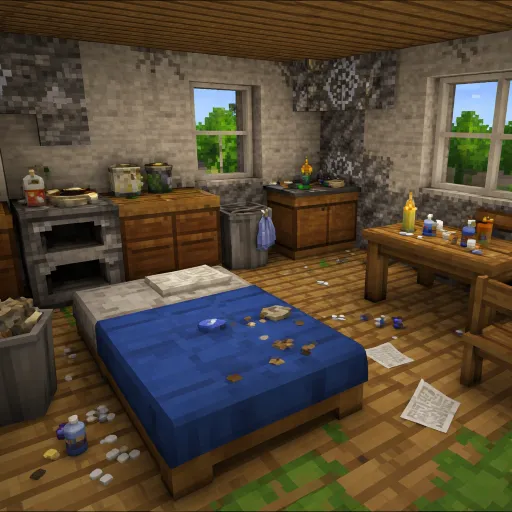
Airplane Mode activated when Jonathan Kohler heard his mother Susie Miller talking about harming him with a hammer. For the first time in years, Jonathan completely disconnected from his role as his mother's emotional caretaker and focused solely on his physical survival. He jumped out his window and ran to safety, temporarily cutting off all the psychological connections that normally kept him trapped in the house trying to manage her mental state.
Jonathan realizes the hammer is meant for him and for the first time completely disconnects from his role as his mother's caretaker to focus on survival.
"i was just suddenly starting to realize that the hammer wasn't for her it was for me so i start to walk out of her room..."

 Airplane Mode
Airplane Mode — Completely disconnect from destructive situations to protect your mental and emotional safety.
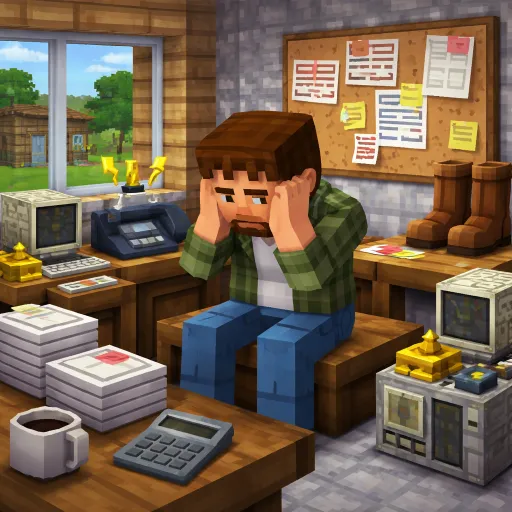
Airplane Mode activated for Brian Smith when he realized he needed to completely disconnect from his toxic business situation for his own safety and mental health. Laura's command to 'walk to bed like a man' snapped him out of his defeated state and made him see that he needed to protect himself from the crushing pressure his partner was creating. He shifted from enduring constant attacks to planning his complete exit from the situation.
Brian Smith realizes he needs to disconnect from his toxic business situation after Laura's wake-up call.
"i was lying on my back on the floor and the show finished i clicked the tv off and i rolled over on my stomach and got u..."

 Airplane Mode
Airplane Mode — Disconnect completely from systems that pose ongoing threats to your safety and wellbeing.
Airplane Mode reflects Abdullah Muhammad al-Taisi's need to disconnect from the systems that brought violence to his community. Living under drone surveillance, Abdullah and his neighbors had to develop ways to mentally disconnect from the constant threat for basic safety and sanity. After the wedding convoy strike killed his son, Abdullah was forced into a more complete disconnection - from the American systems of explanation, accountability, and justice that remained completely inaccessible to him.
Abdullah Muhammad al-Taisi is describing how he and his community had to mentally disconnect from the constant drone surveillance for basic safety and sanity before the wedding convoy strike.
"abdullah said that ever since they'd left that morning through lunch all day long they heard this humming this sort of m..."

 Airplane Mode
Airplane Mode — Disconnect from social expectations when your safety depends on immediate self-protection.
Airplane Mode is about disconnecting for safety, clarity, or self-preservation. When Hayden Panettiere realized the betrayal and danger, she immediately went into a protective mode, disconnecting from her people-pleasing patterns and social expectations. She stopped trying to be polite or avoid conflict and focused entirely on her safety and escape.
Hayden Panettiere describes how she immediately went into protective survival mode when she realized she was trapped and in danger on the boat.
"that lion in me that fire in me that that my my hair stood on on end and i became ferocious i was like this is not happe..."
 Airplane Mode
Airplane Mode — Completely disconnect from toxic family members when partial boundaries aren't sufficient for your safety.
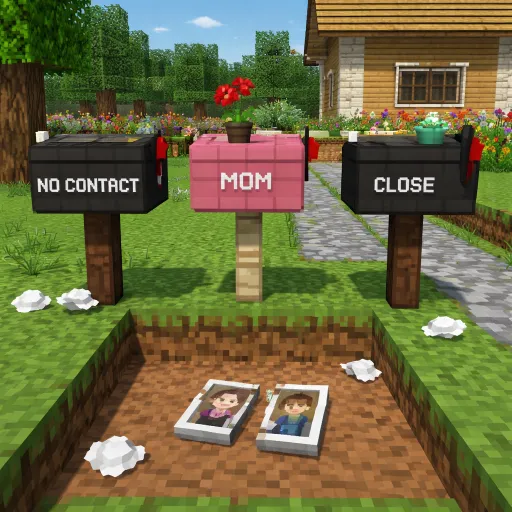
Airplane Mode captures this person's decision to go completely no-contact with their mother for their mental safety and clarity. They recognized they needed to fully disconnect from their mother to preserve their well-being and stop the emotional damage. The person activated airplane mode from their mother entirely, cutting all communication channels.
Alex Cooper is describing the profound decision to go completely no-contact with a mother for mental safety and self-preservation.
"going no contact with a parent is from what i understand i've never done it but i've talked to friends who have done it..."
 Airplane Mode
Airplane Mode — Disconnect completely from systems that demand constant control when they threaten your wellbeing.
Airplane Mode reflects how Bridget Ball had to completely disconnect from her old way of operating for safety and clarity. Cancer forced her into a total systems disconnect from hustle culture and control-based thinking. She couldn't access her usual patterns of working harder or planning more - she had to go offline from those systems entirely to survive.
Bridget Ball is explaining how cancer completely shattered her illusion of control and forced her to realize she had never really been in control, even before diagnosis.
"cancer has a lot to do with like control and the illusion of control and like it really strips you of that i was a contr..."

 Airplane Mode
Airplane Mode — Completely disconnect from normal social life when your safety depends on remaining invisible.
Airplane Mode is about knowing when to fully disconnect for safety, clarity, or self-preservation. John Amendez lived in permanent airplane mode during her CIA career, completely disconnected from normal civilian life for her own safety and that of the agents she worked with. The terrorist encounter reinforced why this total disconnection was necessary — being seen could literally get her killed. She had to stay in airplane mode to survive.
Jonna Mendez describes how her CIA career required complete disconnection from normal life for safety and operational security.
"because i was in the cia and undercover everything i did every trip i took every operation i took part in i was typicall..."

 Airplane Mode
Airplane Mode — Completely disconnect from systems that consistently harm your mental state rather than trying to moderate your use.
Airplane Mode perfectly captures Tim Ferriss's approach to social media - completely disconnecting for safety, clarity, and self-preservation. By removing social media apps from his phone entirely, he created a total systems safeguard against the addictive pull of these platforms that were harming his psychological well-being.
Tim Ferriss describes watching a successful friend remove social media, experience incredible benefits, then get pulled back into the cycle.
"like my friends even some of my most accomplished cheaper friends these are like mega stars within business i know one g..."

 Airplane Mode
Airplane Mode — Disconnect completely when your safety is genuinely threatened and normal responses won't work.
Airplane Mode kicked in when Gary Stauble was grabbed by six armed men on the dark highway in Mexico. His entire system went into complete shutdown mode for safety and self-preservation. Gary described feeling like he was in the jaws of a shark that held him at the bottom of the ocean - totally disconnected from his normal reality and operating only on survival instincts.
Gary Stauble describes the moment one of his kidnappers unexpectedly returned and gave him back his motorcycle keys after the attack.
"and then out of the darkness one of them comes trotting back towards me still with the mask still with the rifle and i'm..."
 Airplane Mode
Airplane Mode helped Gerald completely disconnect from all the systems and relationships that had become toxic or overwhelming. Instead of staying partially connected - trying to text his ex-wife, checking in sporadically, maintaining the threads that kept him tied to his old life - he went full airplane mode. No phone, no fixed address, no way for the old problems to reach him. This wasn't avoidance; it was a deliberate disconnection for safety and clarity.
Gerald is explaining to Kevin why he chose to become homeless and travel across the country after his wife left him.
"I realized that if I didn't actually go away for a while, that her heart can't mend, where she couldn't grow and become..."

 Airplane Mode
Airplane Mode became Eumilis's survival strategy after the ICE raid. She had been connected to her community — working, sending kids to school, building relationships — but after agents shot Julio and took her daughter, she switched to complete disconnection. She stopped going to work, pulled all the kids out of school, and cut herself off from normal life. Airplane Mode helped her recognize that total disconnection was necessary for the safety of her family, even though it meant losing the life they'd worked so hard to build.
Eumilis expresses her desperate hope for complete concealment after ICE raided her home and shot her daughter's partner.
"she prays that god will just make her house invisible"

 Airplane Mode
Airplane Mode helped Caroline disconnect from her role as the responsible granddaughter trying to enforce medical rules. When she saw her grandmother laughing at the accidentally cleaned chair, she switched off her need to monitor and control, allowing herself to just enjoy the moment and her grandmother's creative spirit. This disconnect from duty let her connect more authentically with Lala.
Caroline describes the moment her grandmother started laughing when she realized the pool chlorine had accidentally cleaned the patio furniture.
"the chlorine from the pool had cleaned that chair it had never looked better"

 Airplane Mode
Airplane Mode shows how he reconnected with his own agency and strength. After his husband's death, he was running on autopilot - just going through the motions of parenting without feeling connected to his own choices or power. He was emotionally disconnected from his role as a father, seeing it as pure obligation. Switching off Airplane Mode helped him connect back to himself and realize he was actively choosing to show up for his kids. He went from feeling like a passive victim to recognizing his own intentional decisions.
His neighbor is challenging his belief that he has no choice in how he's responding to single parenting after his husband's death.
"you're choosing to be there for your kids you're choosing to be available"